
Halloween Night in Austin: Should Kids Wear Jackets Over Their Costumes? A Parent’s Guide to Comfort and Safety
Halloween Costumes Are Exciting, but What Happens When the Weather Changes?
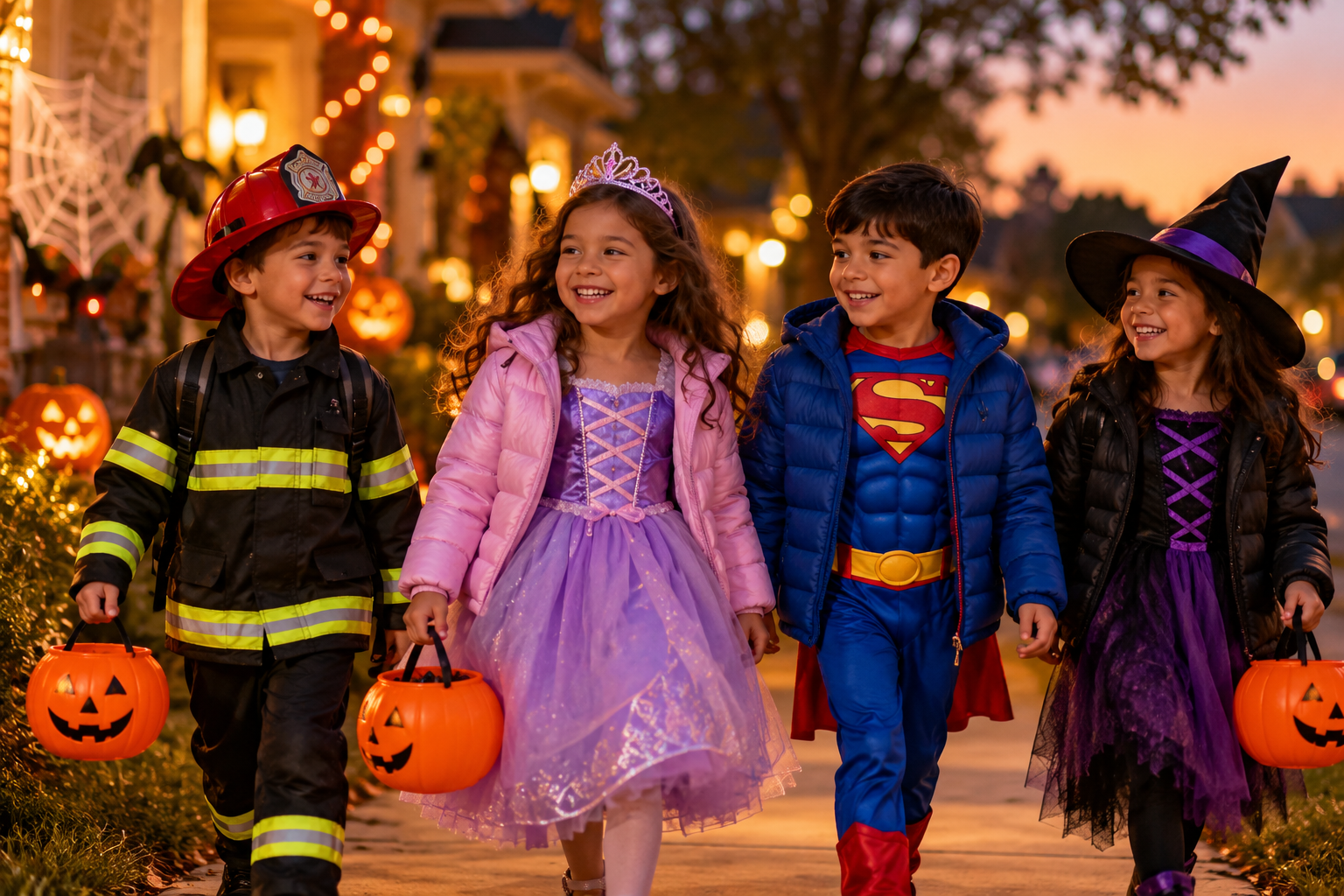
Halloween is one of the most anticipated celebrations of the year for children. Weeks before October 31, many children begin planning their costumes, imagining themselves as superheroes, princesses, firefighters, witches, or their favorite animated characters. The excitement extends beyond simply wearing a costume. Children look forward to showing their outfits to friends, visiting neighbors, collecting candy, and enjoying an evening when imagination becomes part of everyday life.
For parents, however, Halloween night often involves considerations that children may not fully understand. Will temperatures become colder after sunset? Should children wear jackets over their costumes? Are decorative shoes appropriate for walking through neighborhoods? What happens if a child becomes uncomfortable halfway through trick-or-treating? These questions become particularly important for families in Austin, Cedar Park, Leander, Round Rock, and surrounding Central Texas communities, where late-October weather can vary considerably.
Children naturally want their costumes to look exactly as they imagined. A princess may not want a jacket covering her dress, while a superhero may insist that additional clothing ruins the appearance of the character. Parents, meanwhile, must balance that excitement with the responsibility of ensuring their children are dressed appropriately for outdoor conditions.
The solution is not necessarily choosing between appearance and comfort. With thoughtful preparation, families can allow children to enjoy showing off their Halloween costumes while making practical decisions about warmth, footwear, mobility, and safety.
Understanding Halloween Weather in Austin and Cedar Park
Central Texas weather during late October can be unpredictable. Some Halloween evenings are warm enough for lightweight costumes, while others bring cooler temperatures, stronger winds, or occasional rain. A costume that feels comfortable during the afternoon may not provide adequate warmth later in the evening, particularly when children spend extended periods walking outdoors.
Parents should consider the forecast for the hours when their children will actually be trick-or-treating rather than relying on daytime temperatures. An evening that begins comfortably may become noticeably cooler after sunset, especially when wind conditions change. Similarly, families should recognize that adding multiple heavy layers during an unusually warm Halloween can create unnecessary discomfort.
The length of the planned outing also matters. A family visiting a few nearby houses may have different clothing needs from children walking through several neighborhoods over an extended period. Younger children may become tired or uncomfortable more quickly, while older children may be reluctant to acknowledge that they are cold because they want to continue collecting candy.
Preparing for Halloween weather should therefore involve more than selecting a costume. Parents should evaluate the expected temperature, wind, potential rainfall, duration of outdoor activities, and individual comfort needs of each child. This approach helps families avoid unnecessary interruptions while allowing children to enjoy the celebration.
Should Children Wear Jackets Over Their Halloween Costumes?
One of the most common Halloween disagreements occurs when parents suggest adding a jacket to a costume that a child has spent weeks planning. From a child’s perspective, the costume represents the excitement of Halloween, and covering it with ordinary clothing may feel disappointing. Parents may see the situation differently, recognizing that colder temperatures can make outdoor activities uncomfortable.
Rather than treating jackets as an unavoidable inconvenience, families can incorporate weather-appropriate clothing into costume planning. Lightweight thermal shirts, fitted long-sleeve tops, leggings, and tights can often be worn underneath costumes without significantly changing their appearance. A princess dress may accommodate coordinating leggings, while a superhero outfit may allow an additional fitted layer underneath. Costumes with longer sleeves or thicker fabrics may require fewer adjustments, depending on the weather.
When a jacket is necessary, parents can consider selecting one that complements the costume’s colors or design. A coordinating cardigan, hoodie, or lightweight coat may be more acceptable to children than an unrelated jacket. However, parents should avoid choosing clothing solely because it looks attractive if it does not provide adequate warmth or protection.
Another practical approach is allowing children to take photographs before leaving home or during the earlier part of the evening when temperatures permit. This gives them an opportunity to proudly display their costumes while understanding that additional layers may become necessary later. By preparing children in advance, parents can reduce last-minute disagreements and preserve the excitement surrounding Halloween.
Why Comfortable Shoes Matter More Than Matching the Costume
Footwear is frequently overlooked when families prepare Halloween costumes. Children may select decorative princess shoes, superhero boots, costume slippers, or other accessories that complete their character’s appearance. Although these items can look appealing, they are not always designed for extended walking, particularly on uneven sidewalks, driveways, steps, or wet surfaces.
Trick-or-treating often involves more physical activity than families initially expect. Children may walk considerable distances, repeatedly approach houses, climb steps, and move between different surfaces. Shoes that fit poorly or provide inadequate support can lead to blisters, foot discomfort, slipping, or tripping. Even a relatively short outing can become frustrating when children begin complaining that their feet hurt.
For most children, familiar sneakers or supportive walking shoes are a practical choice. Parents should prioritize proper fit, secure fastenings, comfortable soles, and adequate traction. Shoes should also be appropriate for the expected weather, particularly when rain or cooler temperatures are possible.
If children strongly prefer decorative costume footwear, parents can allow them to wear those shoes for photographs before switching to comfortable walking shoes. This compromise preserves the visual appeal of the costume without requiring children to sacrifice comfort throughout the evening. For toddlers and preschoolers, familiar footwear is especially important because younger children may struggle to communicate discomfort until they become upset or refuse to continue walking.
Choosing Costumes That Allow Children to Move Comfortably
Halloween costumes are often selected based on appearance, but fit and mobility are equally important. Long princess dresses, oversized capes, elaborate accessories, and bulky character costumes may look impressive in photographs while creating practical difficulties during outdoor activities. Clothing that drags along the ground can become tangled around children’s feet, while restrictive fabrics may interfere with walking, bending, or climbing steps.
Parents should encourage children to try on their complete Halloween outfits several days before the celebration. This should include shoes, masks, hats, accessories, and any additional clothing layers that may be necessary. During the fitting, children can practice walking, sitting, bending, and moving naturally to determine whether the costume creates discomfort or limits movement.
Costume accessories deserve particular attention because they may interfere with visibility or balance. Masks that restrict peripheral vision can make it difficult for children to notice obstacles, while oversized headpieces may shift during movement. Long capes and loose decorations can also become caught on surrounding objects. Adjusting these items before Halloween night can help prevent avoidable problems.
The goal is not to discourage elaborate costumes but to ensure that children can participate comfortably in the activities they are excited about. A costume should support the Halloween experience rather than create limitations that make the evening less enjoyable.
Families planning a visit to Inflatable Wonderland Austin can review our frequently asked questions and play guidelines to better understand footwear requirements, adult supervision, and other considerations before arriving.
Can Children Become Too Warm in Their Halloween Costumes?
Although parents frequently worry about cooler Halloween temperatures, overdressing can create problems as well. Austin’s late-October weather may remain relatively warm, and children wearing heavy costumes, thick jackets, or multiple layers may become uncomfortable while walking through neighborhoods. Physical activity can increase body temperature, particularly when children are moving continuously between houses.
Parents should consider clothing that can be adjusted throughout the evening. Removable jackets, lightweight sweaters, and breathable layers provide greater flexibility than heavy clothing that cannot easily be removed. Families should also consider whether costume materials trap heat, especially when outfits include synthetic fabrics, full-body coverings, or elaborate headpieces.
Monitoring children’s comfort is important because excitement may distract them from recognizing changes in body temperature. Excessive sweating, flushed skin, or complaints about feeling hot may indicate that clothing needs to be adjusted. Similarly, shivering or persistent complaints about cold temperatures suggest that additional warmth or a shorter outing may be appropriate.
The most effective approach is to dress children for actual conditions rather than assuming that more clothing is always better. Appropriate layering allows families to respond to changing temperatures while keeping children comfortable throughout the celebration.
How Parents Can Handle Disagreements About Jackets and Shoes
Halloween clothing disagreements often arise because children and parents approach the celebration with different priorities. Children may focus on how their costumes look, while parents consider weather conditions, walking distances, and potential discomfort. When these concerns are introduced only moments before leaving home, even small disagreements can become frustrating.
Discussing clothing expectations several days before Halloween can help families avoid unnecessary conflict. Parents can explain that the costume should look exciting while also being appropriate for outdoor activities. Children can participate in choosing coordinating jackets, comfortable shoes, or additional clothing layers that complement their outfits.
Offering reasonable choices can help children feel involved in the planning process. For example, a child might choose between wearing a fitted long-sleeve shirt underneath the costume or bringing a jacket that can be added when necessary. Parents can also explain why decorative shoes may not be suitable for walking long distances and encourage children to select comfortable alternatives.
Although flexibility is valuable, parents should maintain clear expectations when weather conditions or safety concerns require appropriate clothing. The objective is not to diminish children’s enthusiasm but to help them understand that practical decisions can make special occasions more enjoyable. Over time, these conversations can also teach children how to balance personal preferences with comfort and responsibility.
Special Halloween Clothing Considerations for Toddlers and Preschoolers
Toddlers and preschoolers have different needs from older children because their tolerance for walking, complicated costumes, and extended outdoor activities may be more limited. A toddler may enjoy dressing as a pumpkin, dinosaur, or favorite cartoon character but become uncomfortable when the costume includes heavy fabrics, restrictive accessories, or unfamiliar shoes.
Parents should prioritize soft, flexible clothing that allows younger children to move naturally. Costumes should also make diaper changes or bathroom visits manageable, particularly when families plan to spend time away from home. Small detachable decorations should be avoided when they present choking hazards, and costume accessories should be appropriate for the child’s age.
For children using strollers, parents should consider additional layers when temperatures become cooler while ensuring that blankets or clothing do not restrict airflow or cause overheating. Toddlers who will walk independently should wear familiar, supportive shoes that allow them to move confidently on sidewalks and other outdoor surfaces.
Families should also remain realistic about how long younger children can comfortably participate in trick-or-treating. A shorter neighborhood outing may create more positive memories than an extended evening that leaves children tired, cold, or overwhelmed. Parents can preserve the excitement by focusing on the quality of the experience rather than the number of houses visited.
Preparing for Rain, Wind, and Unexpected Weather Changes
Rain and wind can introduce additional challenges for children wearing Halloween costumes. Long dresses may become wet and heavy, decorative shoes may lose traction on slippery surfaces, and lightweight costumes may provide little protection against cooler winds. Families should review weather conditions before leaving home and consider whether their children’s outfits can accommodate appropriate protection.
Water-resistant jackets, suitable footwear, and other weather-appropriate accessories may be useful during light rain when outdoor conditions remain safe. Parents should also consider how easily costumes can become damaged or uncomfortable when exposed to moisture. Carrying an extra layer or a change of clothing may be worthwhile for younger children who are more sensitive to discomfort.
If thunderstorms or hazardous weather develop, families should prioritize safety rather than attempting to complete their planned trick-or-treating route. Children may initially feel disappointed, particularly when they have been anticipating Halloween for weeks, but parents can preserve the celebration through indoor games, costume photographs, or other family activities.
Planning for unexpected weather does not mean assuming Halloween will be unpleasant. It simply allows families to make informed decisions without feeling pressured to continue outdoor activities when conditions are no longer appropriate.
Why Visibility and Practical Accessories Still Matter
Halloween costumes frequently feature dark colors, particularly when children dress as witches, vampires, skeletons, or other traditional characters. Although these designs are popular, dark clothing can make children less visible to drivers after sunset. Parents should therefore consider whether costumes can incorporate reflective accessories, reflective tape, or small wearable lights without significantly changing their appearance.
Flashlights can help families navigate darker areas, while reflective materials may improve children’s visibility when headlights shine on them. Parents should also ensure that costume accessories do not obstruct children’s ability to see clearly or respond to instructions. Masks, hats, and decorative headpieces should fit securely and allow children to remain aware of their surroundings.
Clothing and visibility are only part of Halloween preparation. Families seeking broader guidance about neighborhood activities, candy precautions, and pedestrian awareness can explore our related guide to Halloween trick-or-treating safety in Austin. That article addresses general safety considerations, while this guide focuses specifically on choosing appropriate clothing and footwear for the evening.
Teaching Children That Comfort and Appearance Can Work Together
Halloween provides an opportunity for parents to teach children an important lesson about balancing creativity with practical decisions. Children naturally want to express themselves through their costumes, and that enthusiasm should be encouraged. At the same time, they can begin learning that clothing choices should reflect the activities they plan to participate in and the conditions they may encounter.
Parents can reinforce this lesson by connecting Halloween preparation to familiar experiences. Children already understand that certain shoes are better for sports, comfortable clothing is important for playground activities, and jackets may be necessary during cooler weather. Applying the same reasoning to Halloween helps children recognize that appropriate clothing does not diminish the excitement of a special occasion.
The goal should not be to convince children that appearance is unimportant. Instead, parents can explain that looking good and feeling comfortable are both worthwhile goals, but safety and well-being take priority when the two conflict. By encouraging children to participate in practical decisions, families can build confidence while preserving the imagination and excitement that make Halloween memorable.
Continuing the Fun Beyond Halloween at Inflatable Wonderland Austin
Halloween highlights how much children enjoy imagination, creativity, and opportunities to express their personalities. Whether they are pretending to be superheroes, princesses, or adventurous explorers, children often find the greatest enjoyment in activities that allow them to move freely and participate confidently.
At Inflatable Wonderland Austin, located inside Lakeline Mall in Cedar Park, families can enjoy indoor activities that encourage movement, exploration, and active fun. Our indoor playground and open-play attractions provide opportunities for children to enjoy inflatables, slides, and other activities in a climate-controlled environment. Comfortable playwear and socks are important for children participating in active indoor play.
While Halloween costumes are wonderful for celebrations and photographs, active indoor play generally requires practical clothing that allows children to move comfortably. Families visiting Inflatable Wonderland should choose appropriate playwear and follow facility safety requirements, including wearing socks in designated play areas.
For parents looking for additional family activities during cooler months, our guide to why families visit indoor playgrounds during the fall season explores how indoor play can help children stay active when outdoor weather becomes less predictable. Whether families are celebrating Halloween or planning weekend activities, choosing comfortable clothing and age-appropriate experiences can help children enjoy their time together.
Key Takeaways: Halloween Costume Comfort and Safety for Austin Families
- Prioritize comfort over costume appearance. Children should enjoy showing off their Halloween costumes, but clothing should never compromise warmth, movement, or safety.
- Check Austin’s Halloween evening forecast. Temperatures can change after sunset, making it important to prepare for cooler conditions, wind, or rain.
- Keep an extra jacket available. Lightweight jackets, coordinating sweaters, or thermal layers can help children stay warm without unnecessarily covering their costumes.
- Choose comfortable walking shoes. Supportive sneakers or properly fitted shoes with adequate traction are generally better than decorative costume footwear for extended trick-or-treating.
- Make sure costumes fit properly. Avoid excessively long dresses, oversized capes, restrictive accessories, or masks that interfere with movement and visibility.
- Avoid overdressing children. Heavy costumes and multiple layers can cause overheating, particularly during warmer Halloween evenings in Central Texas.
- Prepare younger children differently. Toddlers and preschoolers benefit from soft costumes, familiar footwear, manageable accessories, and shorter outings.
- Improve visibility after sunset. Reflective accessories, flashlights, and properly fitted costume pieces can help children remain more visible and aware of their surroundings.
- Involve children in clothing decisions. Allowing children to choose coordinating jackets or comfortable shoes can reduce disagreements while reinforcing practical decision-making.
- Focus on the Halloween experience, not the perfect costume. The most memorable celebrations are those where children feel comfortable, confident, and free to enjoy themselves.
Frequently Asked Questions About Halloween Clothing and Costume Comfort
1. Should children wear jackets over their Halloween costumes?
Children should wear jackets when weather conditions make additional warmth necessary. Parents can preserve the appearance of costumes by selecting coordinating jackets or incorporating warm layers underneath the outfit. However, adequate warmth should take priority when temperatures become uncomfortable.
2. What should kids wear for trick-or-treating in Austin?
Children should wear weather-appropriate costumes, comfortable walking shoes, and additional layers when necessary. Because late-October temperatures in Austin can vary, parents should check the forecast for the actual trick-or-treating hours rather than relying on daytime conditions.
3. Is it okay for children to trick-or-treat without jackets?
Yes, when temperatures and weather conditions are comfortable. However, bringing a lightweight jacket can help families prepare for cooler temperatures later in the evening. Parents should consider the child’s age, costume material, and expected duration of outdoor activities.
4. What shoes are best for Halloween trick-or-treating?
Comfortable sneakers or supportive walking shoes with adequate traction are generally the best choices. Decorative costume footwear may not provide sufficient comfort for extended walking, particularly on uneven sidewalks, driveways, or wet surfaces.
5. Can children wear princess shoes while trick-or-treating?
Decorative princess shoes may be appropriate for photographs or short periods of wear, but they are not always suitable for neighborhood walking. Parents should evaluate the fit, traction, and comfort of the shoes before allowing children to wear them outdoors for extended periods.
6. Should children wear thermal clothing underneath Halloween costumes?
Thermal clothing can be useful when temperatures are cooler, particularly for costumes made from thin materials. Parents should select lightweight, comfortable layers that do not restrict movement or cause overheating. The amount of additional clothing needed depends on the weather and the child’s individual comfort.
7. How can parents keep children warm without covering their costumes?
Fitted long-sleeve shirts, leggings, tights, and other coordinating layers can often provide warmth without significantly changing a costume’s appearance. Parents can also choose jackets that complement the outfit, although adequate protection should remain more important than maintaining a particular look.
8. Are long Halloween costumes safe for children?
Long costumes can create tripping hazards when fabric drags along the ground or becomes tangled around children’s feet. Parents should ensure that costumes fit properly and allow children to walk, bend, and move comfortably before wearing them outdoors.
9. Can Halloween costumes make children too hot?
Yes. Heavy costumes, synthetic materials, and multiple clothing layers can cause discomfort, particularly during warm weather or extended walking. Parents should monitor children’s comfort and adjust removable layers when necessary.
10. What should toddlers wear for their first Halloween?
Toddlers should wear soft, flexible costumes that allow comfortable movement and easy diaper changes or bathroom visits. Parents should choose familiar footwear, avoid potentially hazardous accessories, and prepare appropriate layers based on the weather.
11. What should parents do if their child refuses to wear a jacket?
Parents can reduce disagreements by discussing clothing expectations before Halloween and allowing children to help choose coordinating layers. When temperatures require additional warmth, parents should maintain clear expectations while explaining that appropriate clothing helps children enjoy the celebration comfortably.
12. What should children wear if it rains on Halloween?
Children should wear weather-appropriate clothing and footwear that provides adequate traction on wet surfaces. Parents should also consider rain protection and whether costumes may become uncomfortable when wet. Outdoor activities should be postponed or ended during thunderstorms or hazardous weather.
13. Should children wear masks while trick-or-treating?
Masks should fit securely without obstructing vision, breathing, or hearing. Parents should ensure that children can see clearly and remain aware of their surroundings. When masks significantly restrict visibility, alternative costume accessories may be more appropriate.
14. Is comfort more important than costume appearance?
Yes. Although Halloween costumes are an important part of children’s excitement, comfort and safety should take priority when clothing creates practical difficulties. Parents can often preserve the costume’s appearance through thoughtful layering, appropriate footwear, and advance planning.
15. How can parents prepare Halloween costumes before October 31?
Parents should encourage children to try on their complete costumes several days before Halloween, including shoes, masks, accessories, and additional clothing layers. This allows families to identify potential issues with fit, movement, visibility, and comfort before the celebration begins.
Conclusion: The Best Halloween Costume Is One Children Can Enjoy Wearing
Halloween should be remembered for excitement, imagination, neighborhood traditions, and the joy of childhood. Children deserve the opportunity to proudly display their favorite costumes, but parents also have a responsibility to ensure those outfits are appropriate for the evening’s activities and weather conditions. A costume that looks beautiful in photographs may become less enjoyable when a child is cold, uncomfortable, or struggling to walk.
For families in Austin, Cedar Park, and surrounding communities, thoughtful Halloween preparation can make a meaningful difference. Choosing comfortable shoes, incorporating appropriate clothing layers, checking the weather forecast, and discussing expectations with children can help prevent unnecessary discomfort while preserving the excitement of the celebration.
Ultimately, the most important Halloween fashion decision is not whether a costume looks perfect throughout the evening. It is whether children can enjoy the experience comfortably, confidently, and safely. When parents balance creativity with practical precautions, Halloween becomes an opportunity to create positive family memories that last long after the costumes are put away.
The way we communicate with others and with ourselves ultimately determines the quality of our lives
~ Anthony Robbins
~ Anthony Robbins