
Every parent has seen that moment. A child watches Michael Jordan take over a basketball game and suddenly wants to play basketball every day. They watch Stephen Curry shoot three-pointers from what seems like impossible distance and start practicing their own shots in the driveway. They see Serena Williams compete with determination and decide they want to become a tennis player. Maybe it is Lionel Messi with a soccer ball, Cristiano Ronaldo scoring goals, Simone Biles on the gymnastics floor, Tiger Woods on a golf course, Virat Kohli walking onto a cricket field, or another legendary athlete who makes a child stop and say: “I want to do that someday.” Those moments can be powerful, especially for children who are beginning to discover what they love. A sports legend can provide the inspiration, but what happens next is often shaped by the people closest to the child. But raising a passionate child isn’t about trying to turn every interest into a career. It is about recognizing when something genuinely excites your child—and then giving them the support, opportunities, patience, and encouragement to see where that interest takes them. The child supplies the spark. Parents help protect the flame. For parents in Austin, Cedar Park, and Leander, that support can take many forms: listening to what excites a child, finding opportunities to practice, allowing time for unstructured play, and continuing to encourage them when progress feels slow. The goal isn’t to create a superstar. It’s to help a child discover what makes them want to keep trying.
Raising Passionate Kids: How Parents Can Support a Child’s Dreams Without Pressure

Passion Often Starts With Inspiration From Role Models
Children need examples.
When kids see extraordinary athletes, musicians, artists, scientists, entrepreneurs, or other role models doing something they love, they begin to imagine possibilities for themselves.
Michael Jordan wasn’t simply a basketball player to millions of children. He represented what dedication could look like.
Stephen Curry showed young athletes that skill, creativity, and confidence could change the way a game is played.
Serena Williams demonstrated determination and resilience at the highest level. Virat Kohli inspires young cricket fans through his intensity, discipline, and commitment to the game. Football legends such as Lionel Messi and Cristiano Ronaldo offer different examples of skill, creativity, discipline, and competitive drive.
These figures can inspire children to ask questions:
- “Could I do that?”
- “How did they get so good?”
- “How much did they practice?”
- “What would happen if I tried?”
- “Can I get better?”
That curiosity is worth encouraging.
Parents don’t have to tell children that they will become the next Jordan, Curry, Kohli, Messi, Ronaldo, or Serena Williams.
Instead, try saying:
“What do you like about watching them?”
That simple question can reveal what your child actually finds exciting.
Maybe they love competition.
Maybe they love practicing.
Maybe they love the teamwork.
Maybe they love the feeling of improving.
Or maybe they simply love the sport.
Understanding why your child is fascinated by something is the first step toward nurturing genuine passion.
Passion Is Different From Pressure
There is an important difference between supporting a child’s passion and creating pressure around it.
A passionate child might want to practice basketball every day.
A pressured child may feel that they have to practice because their parents expect them to become a professional athlete.
Those are completely different experiences.
Children thrive when they feel ownership of their interests.
Parents can provide opportunities without taking control of the dream.
Instead of:
“You need to practice if you want to become great.”
Try:
“You really seem to enjoy this. Do you want to practice?”
Instead of:
“You need to win this game.”
Try:
“What do you want to work on today?”
The goal is to help children associate effort with enjoyment—not fear of disappointing their parents.
The Most Important Thing Parents Can Give: Continued Support
Passion doesn’t always grow in a straight line.
A child might love soccer for six months and then become fascinated by basketball.
They might spend an entire summer practicing dance and then suddenly become interested in robotics.
That doesn’t necessarily mean they lack commitment.
Children are discovering who they are.
Some interests will disappear.
Others will stick.
And occasionally, one interest becomes something they truly love.
Parents don’t always know which one it will be.
That’s why continued support matters.
Take them to practice.
Watch their games.
Ask about what they learned.
Celebrate improvement.
Help them find opportunities to explore.
Listen when they are frustrated.
And most importantly, show interest even when they are not winning.
Your child may forget the score of a game years from now.
They may remember that you were sitting in the stands.
Let Kids Experience the Joy of Getting Better
One of the most powerful parts of passion is seeing progress.
A child tries something.
They struggle.
They try again.
Eventually, something clicks.
Suddenly they can jump higher, run faster, make the shot, complete the move, solve the problem, or finish the challenge they couldn’t finish before.
That moment can be incredibly motivating.
Parents can help by pointing out progress.
Instead of always saying:
“You’re so talented!”
Try:
“You couldn’t do that last month. Look how much you’ve improved.”
This teaches children something important:
Improvement comes from effort.
That lesson can follow them far beyond sports.
Don’t Be Afraid To Let Them Struggle
Passionate kids will eventually encounter frustration.
They will miss the shot.
Lose the race.
Fall during practice.
Fail to make the team.
Struggle with a skill.
Watch another child perform better.
Their first instinct might be:
“I’m not good at this.”
That’s where parents can make a tremendous difference.
You don’t have to immediately fix the problem.
Sometimes children need to experience disappointment, process it, and decide whether they want to try again.
You can say:
“That was frustrating. Do you want to try again?”
Or:
“What do you think you could do differently next time?”
The message becomes:
Failure isn’t the opposite of passion. It is part of learning.
Give Passionate Kids Opportunities To Move, Explore, and Play
Not every important skill develops during organized practice.
Children also need unstructured opportunities to move and experiment.
A child who loves basketball may practice jumping, balancing, running, and coordination during play.
A child who loves soccer may turn almost anything into a ball.
A future gymnast may spend hours climbing, balancing, jumping, and figuring out how their body moves.
Play gives children a chance to explore movement without worrying about scores, rankings, or performance.
That is one reason active indoor play can complement organized sports.
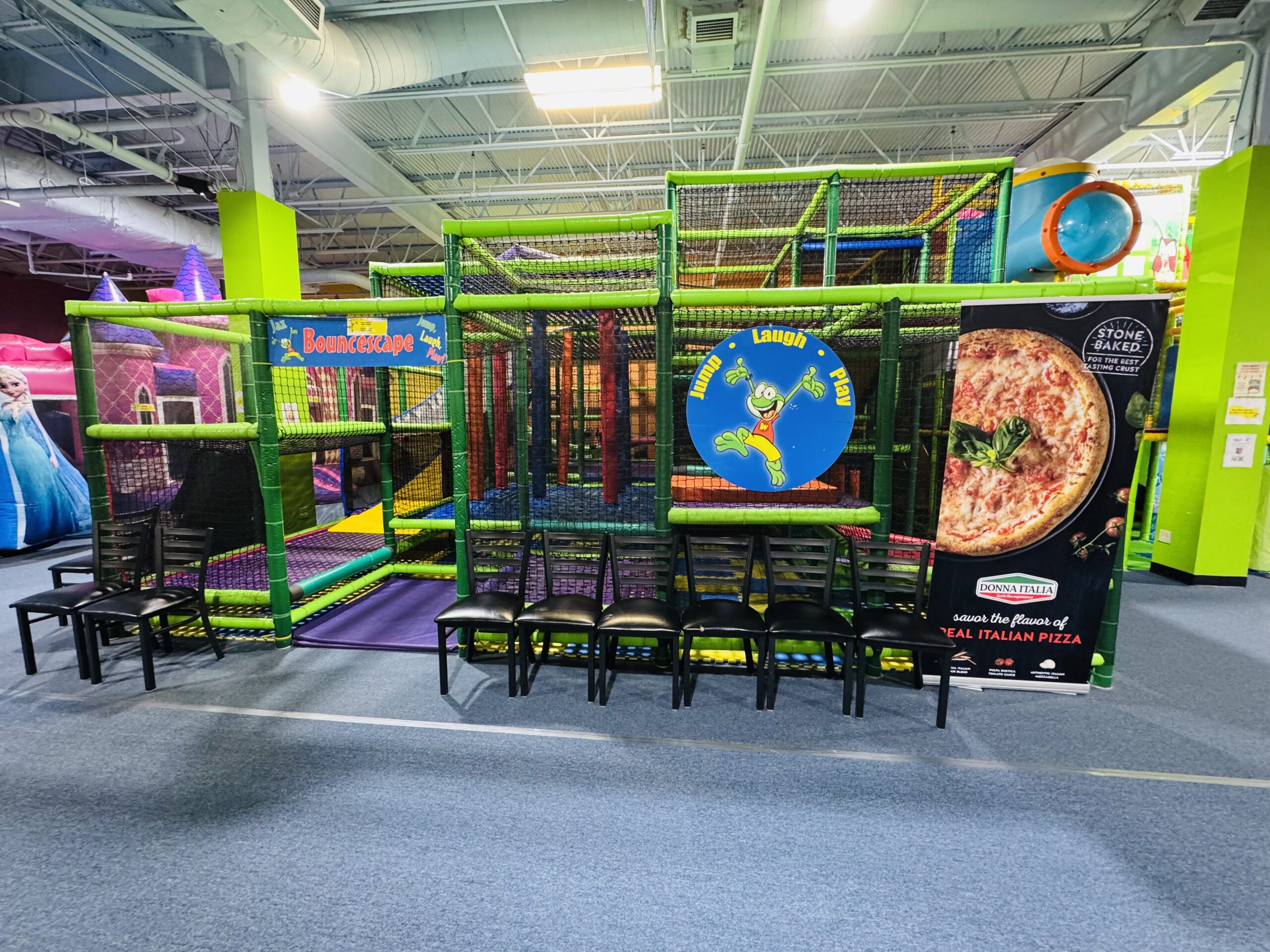
At Inflatable Wonderland Austin, inside Lakeline Mall in Cedar Park, children can bounce, climb, slide, explore, and play in an indoor environment. The location is convenient for families in Cedar Park, Leander, Northwest Austin, and nearby communities looking for an indoor place where kids can move and play.
The goal isn’t to turn every play session into training.
Sometimes kids just need to run.
Sometimes they need to jump.
Sometimes they need to invent their own games.
And sometimes they simply need to have fun.
That freedom can be valuable for children who already spend much of their week following structured schedules.
Watch What Your Child Does When Nobody Is Asking
Want to discover what your child may truly be passionate about?
Watch them when nobody is telling them what to do.
What do they choose?
What activity do they return to?
What do they talk about in the car?
What videos do they want to watch?
What do they practice without being asked?
What challenge makes them say, “Let me try again”?
Those clues can be more meaningful than a parent choosing an activity because they think their child will be good at it.
Passion often reveals itself through repetition.
Children repeatedly return to the things that fascinate them.
Don’t Compare Their Journey With Another Child’s
This can be difficult for parents.
One child is scoring goals at six.
Another is still learning coordination.
One child practices constantly.
Another needs breaks.
One child loves competition.
Another enjoys playing simply for fun.
There is no single timeline for discovering a passion.
Comparing children can turn something they love into something they fear.
Instead, compare your child with their own previous self.
Ask:
“What can you do today that you couldn’t do before?”
That is a much healthier measure of growth.
Be the Parent Who Shows Up
A passionate child doesn’t necessarily need a parent who knows everything about their sport.
They need a parent who shows up.
You don’t have to understand every basketball statistic.
You don’t need to know every soccer formation.
You don’t need to become an expert in gymnastics.
Your role can simply be:
Listen. Encourage. Drive. Watch. Celebrate. Repeat.
There will be practices when your child doesn’t want to go.
There will be games when things don’t go well.
There will be days when they wonder whether they still love the activity.
And there will be days when they are completely obsessed with it again.
That is childhood.
Your continued presence provides something much more important than technical expertise:
security.
Your child knows someone believes in them even when they are still figuring themselves out.
Give Them Space To Change Their Minds
Supporting passion doesn’t mean forcing commitment forever.
If your child decides they no longer enjoy something, listen.
Maybe they genuinely lost interest.
Maybe the environment isn’t right.
Maybe they are overwhelmed.
Maybe they want to explore something new.
Or maybe they simply need a break.
There is a difference between teaching children perseverance and forcing them to continue something they no longer enjoy.
Perseverance sounds like:
“Things are hard right now. Do you want to keep working at it?”
Pressure sounds like:
“You are not allowed to quit.”
Children need to learn the difference.
The Goal Isn’t To Raise The Next Michael Jordan, Virat Kohli, or Football Legend
This may be the most important point.
Your child doesn’t have to become the next Michael Jordan.
They don’t have to become Stephen Curry.
They don’t have to become Serena Williams.
They don’t have to become Lionel Messi, Cristiano Ronaldo, Virat Kohli, Simone Biles, or Tiger Woods.
The real goal is much bigger.
Help your child discover something they genuinely care about.
Then help them learn how to pursue it.
Through practice.
Through patience.
Through failure.
Through excitement.
Through frustration.
Through small victories.
Through showing up again.
Those lessons can shape a child regardless of whether their passion eventually becomes a profession.
The basketball player may become an engineer.
The dancer may become a doctor.
The soccer player may become a teacher.
The child who loves building things may become an entrepreneur.
Passion doesn’t have to determine a career to be valuable.
It teaches children how to care deeply about something—and how to work toward becoming better at it.
How Parents Can Nurture a Passionate Child
Here are simple ways to support a child’s interests without turning them into pressure:
- Pay attention to what naturally excites them.
- Let them choose some of their activities.
- Expose them to inspiring role models.
- Celebrate effort and improvement.
- Let them experience age-appropriate failure.
- Avoid comparing them with other children.
- Create opportunities for active and unstructured play.
- Show up consistently.
- Listen when their interests change.
- Remind them that enjoyment matters more than being the best.
A Simple Parent’s Formula for Supporting Passion
If you’re wondering what to actually do when your child becomes fascinated by a sport or another activity, keep it simple:
Notice → Encourage → Provide opportunities → Let them practice → Support the setbacks → Give them room to grow.
You don’t have to buy every piece of equipment immediately, enroll them in every available class, or turn every weekend into a competition. Start by following their curiosity. If the interest continues, gradually create more opportunities for them to explore it.
For a young athlete, that might mean watching games together, visiting a local field or court, practicing at home, joining an age-appropriate program, or simply giving them time to move and play. For some children, indoor active play can be part of that exploration because it lets them practice movement and physical confidence without every activity being organized around competition.
Key Takeaways for Parents
- Passion often begins with inspiration.
- Sports legends such as Michael Jordan, Stephen Curry, Virat Kohli, Serena Williams, Lionel Messi, Cristiano Ronaldo, Simone Biles, and Tiger Woods can give children powerful examples of dedication, resilience, skill, and achievement.
- Parents don’t need to create a child’s passion; they can notice it and nurture it.
- Continued support is often more valuable than pressure.
- Children need opportunities to practice, struggle, fail, improve, and try again.
- Unstructured physical play can complement organized sports and other activities.
- Comparing children can take the joy out of an activity they once loved.
- Children are allowed to change interests while discovering who they are.
- The goal isn’t necessarily to raise a professional athlete. It is to help children become motivated, resilient, curious, and confident people who know how to pursue something they care about.
Conclusion: Protect the Spark
Every passionate child starts somewhere.
Maybe it begins with watching Michael Jordan.
Maybe it’s a Stephen Curry three-pointer.
Maybe it’s seeing Serena Williams refuse to give up.
Maybe it is Virat Kohli’s intensity on the cricket field, Lionel Messi’s creativity, Cristiano Ronaldo’s determination, or another football legend whose journey makes a child want to pick up a ball and try for themselves.
Maybe it’s a soccer match, a dance performance, a science experiment, a drawing, a musical instrument, or something completely unexpected.
Parents may not know where that first spark will lead.
And they don’t need to.
Their job is not to predict the future.
Their job is to notice the spark, encourage the curiosity, provide opportunities, and keep showing up.
Give children room to play.
Give them permission to try.
Give them support when they struggle.
Celebrate their progress.
And when they look at you and say, “Watch me!”
Watch.
Because sometimes that little moment is where a lifelong passion begins.
The legends children admire may change as they grow, but the lesson can remain: passion grows when children are given something worth dreaming about, room to practice, and parents who continue to believe in them. You cannot decide where your child’s passion will take them. You can simply help them take the next step—and be there for the journey.
Frequently Asked Questions
How can I tell if my child is genuinely passionate about something?
Look for what they voluntarily return to. Children who are developing a genuine interest often talk about the activity, ask questions, practice without being reminded, and want to improve even when nobody is watching.
Should parents push children to stick with an activity?
Parents can encourage perseverance without creating pressure. If a child is struggling, help them understand whether they want to work through the challenge or whether they have genuinely lost interest.
Can active play help children who are passionate about sports?
Yes. Active play gives children opportunities to move, experiment, develop coordination, and enjoy physical activity without the pressure of formal competition. Indoor play can also provide another way to stay active when weather or schedules make outdoor activities difficult.
What if my child keeps changing interests?
That can be completely normal. Childhood is a period of exploration. Trying different activities can help children discover what they genuinely enjoy.
How can parents support a child who dreams of becoming a professional athlete?
Take the dream seriously without making promises about the outcome. Help your child find appropriate opportunities to learn, practice, and compete while keeping school, friendships, family time, health, and enjoyment part of the bigger picture.
Where can kids get active indoor play near Cedar Park and Leander?
Inflatable Wonderland Austin is located inside Lakeline Mall at 11200 Lakeline Mall Drive in Cedar Park. It provides an indoor place for children to bounce, climb, slide, explore, and play, making it an option for families looking for indoor kids’ activities near Cedar Park, Leander, and Northwest Austin.