
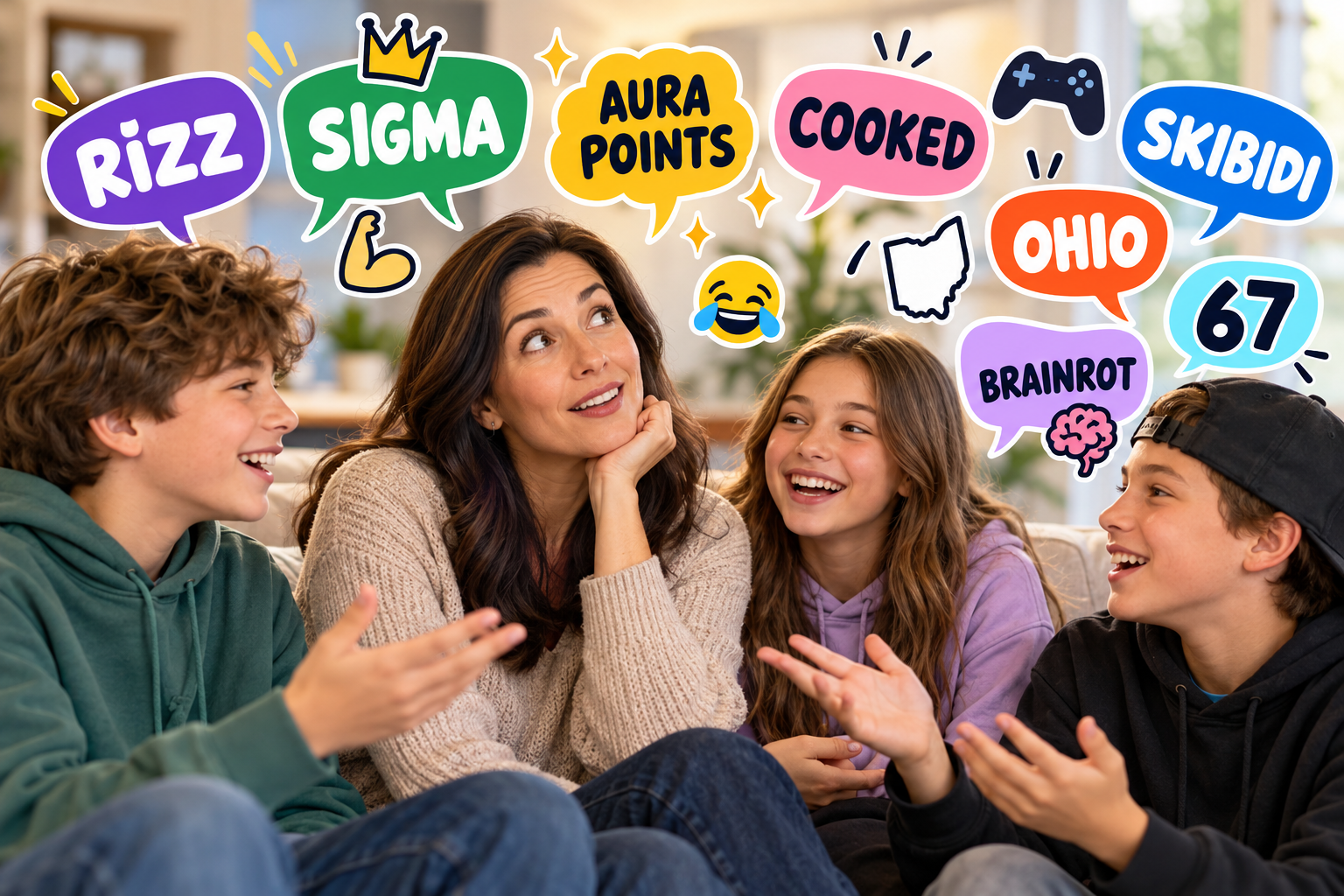
If you have an elementary or middle school student, you may occasionally wonder whether children have developed an entirely new language. Words such as “sigma,” “rizz,” “aura,” “cooked,” “skibidi” and “67” can move quickly from online videos and gaming communities into classrooms, playgrounds and family conversations. Although parents often call this “Gen Z slang,” many children using these expressions today are actually Gen Alpha. Their vocabulary is heavily influenced by Gen Z, older siblings, gaming, social media and internet culture. Parents do not need to memorize every new expression. Understanding a few popular terms—and paying attention to how children use them—can provide a useful window into their friendships, humor and online experiences.
What Did My Kid Just Say? A Parent’s Guide to Gen Alpha Slang
Rizz: A Modern Word for Charisma
Rizz generally means charisma or charm. Although the term was originally associated more closely with someone’s ability to attract another person, elementary and middle school students often use it much more casually.
A child might say a friend “has rizz” because that person is confident, funny or good at talking to people. Among younger children, it may simply function as a playful compliment rather than having a romantic meaning.
Sigma: Cool, Confident—or Just a Joke
Sigma originally developed online around the idea of someone who is independent and self-reliant. Among younger children, however, its meaning has become much broader.
Calling someone “sigma” can mean that the person did something impressive, confident or cool. Children also use the term ironically, so sometimes it functions primarily as a shared joke rather than having a precise meaning.
Aura Points: A New Way of Saying Someone Is Cool
Children sometimes treat aura as an imaginary social score. Doing something impressive might earn hundreds of “aura points,” while an embarrassing moment could result in losing them.
It is essentially a modern way of talking about confidence or being cool. While usually harmless, parents can also remind children that popularity and peer approval should not become measures of someone’s personal value.
What Does “I’m Cooked” Mean?
When a child says “I’m cooked,” it usually means they are in trouble, overwhelmed, exhausted or facing a difficult situation. A student who suddenly remembers that a major project is due the following morning might announce that they are “cooked.”
The related expression “let him cook” has a different meaning. It generally means giving someone an opportunity to continue because they may be developing a good idea or doing something unexpectedly impressive.
Skibidi, Ohio and 67: When Slang Doesn’t Need a Definition
Some modern children’s vocabulary is difficult to translate because having a precise definition is not always the point.
Skibidi developed through internet meme culture and can be used jokingly without a consistent meaning. Ohio became associated with memes describing something strange or chaotic, while 67, pronounced “six-seven,” can function as a joke, reaction or shared reference without having one universally accepted definition.
These expressions demonstrate how youth language has changed in the internet era. Sometimes recognizing the reference and participating in the joke matters more than communicating a literal message.
What Does “Brainrot” Mean?
Brainrot, often written as “brain rot,” generally refers to repetitive, highly absorbing or intentionally ridiculous internet content. Children may also jokingly use the expression when someone cannot stop repeating a particular meme or talking about a game or trend.
Although the term sounds dramatic, it is generally used humorously rather than as a medical statement. For parents, however, hearing it can create a natural opportunity to ask children what content they are watching and why certain trends have become so popular among their friends.
When Parents Should Pay More Attention
Most unusual children’s slang is harmless, but context matters. Certain expressions can become inappropriate when they are used to embarrass, bully, sexualize or make comments about another person’s body or appearance.
Rather than treating every unfamiliar word as a problem, parents can ask what the expression means among their child’s friends and how it is being used. Understanding the context is usually more valuable than maintaining a constantly changing list of words children should or should not say.
How Slang Moves From Screens Into Everyday Life
Children rarely keep their online and offline vocabulary separate. A phrase discovered while gaming or watching a video can appear at school the following morning and later become part of conversations during sports, birthday parties, family outings and playground time.
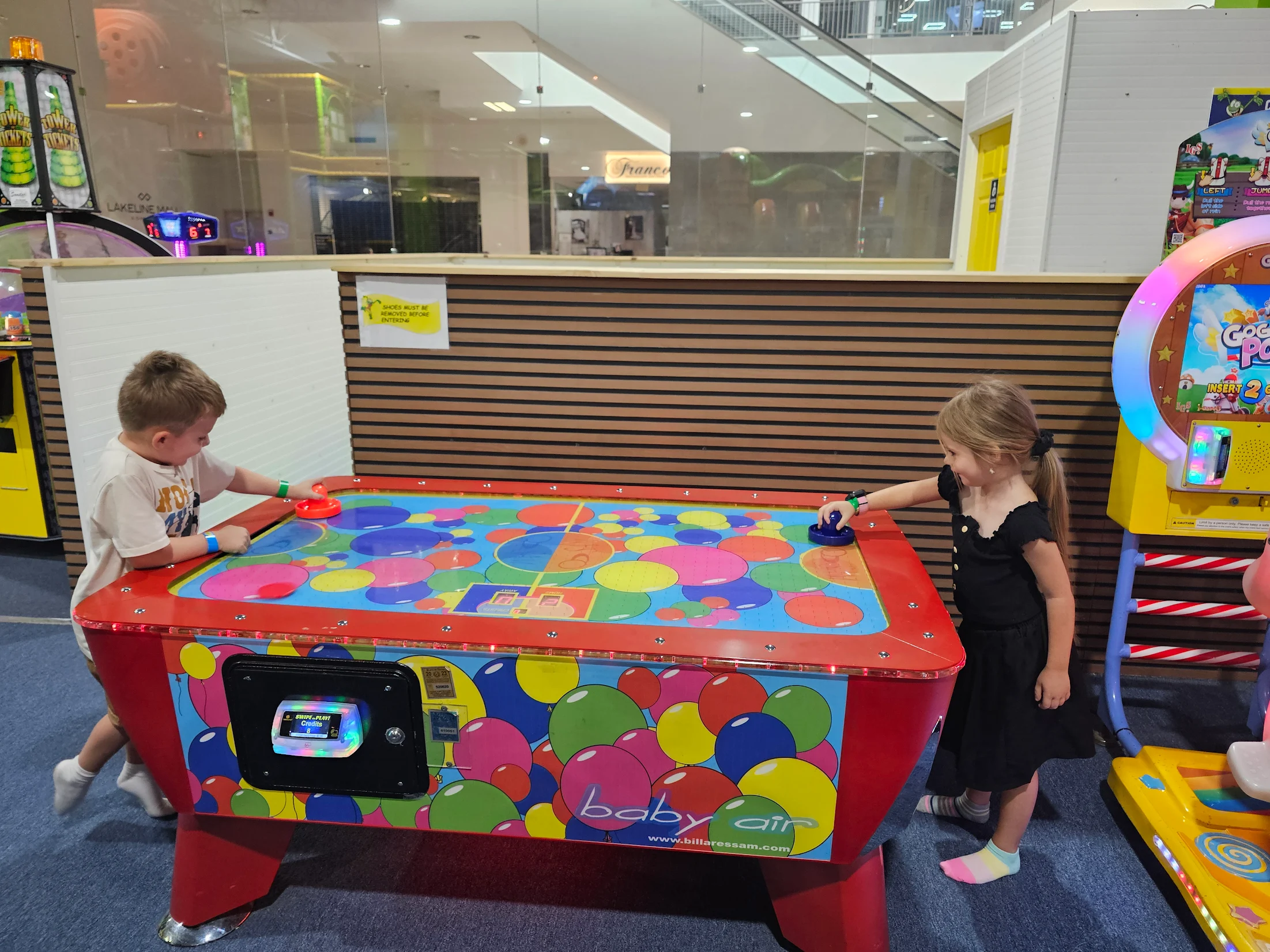
Parents may hear the same vocabulary when children are simply having fun together at places such as Inflatable Wonderland at Lakeline Mall in the Austin/Cedar Park area. Friends might jokingly award one another “aura points,” call an impressive move “sigma” or announce that someone is “cooked” after losing a challenge.
The terminology may be new, but the underlying behavior is familiar. Children have always created inside jokes and developed language that helps them connect with their friends. Today’s version simply spreads much faster because children’s social worlds increasingly extend across both physical and digital spaces.
Parents Don’t Need to Speak Like Their Kids
Understanding children’s vocabulary does not mean parents need to start using it themselves. In fact, hearing Mom or Dad confidently attempt the latest slang may be exactly what makes a child decide the expression is no longer cool.
Curiosity is usually more useful than imitation. Questions such as “What does that mean when you guys say it?” or “Is that supposed to be funny or insulting?” allow children to explain their culture while giving parents useful insight into friendships, school conversations and online influences.
These discussions do not need to become serious interrogations. Allowing children to become the expert for a few minutes can turn unfamiliar slang into an easy and surprisingly useful family conversation.
Key Takeaways
- Rizz generally refers to charisma or charm.
- Sigma can mean confident, impressive or cool, but children also use it jokingly.
- Aura points are an imaginary way of measuring confidence or social coolness.
- Cooked usually means being in trouble, overwhelmed or exhausted.
- Skibidi, Ohio and 67 are strongly influenced by meme culture and may not have precise definitions.
- Brainrot usually describes repetitive or highly absorbing internet content.
- Context matters more than memorizing definitions, particularly when language is directed toward another child.
Conclusion
Parents do not need to become experts in every new word their children bring home. Many expressions will disappear almost as quickly as they appeared, while others may eventually become part of everyday language.
What matters more is maintaining enough curiosity to ask what a term means, how children are using it and whether it is simply playful or being directed at someone in an inappropriate way. Understanding a little of children’s language can become an easy opening for larger conversations about friendships, school and the online culture influencing their generation.
For Austin-area parents, those conversations may happen anywhere—from the dinner table and school pickup line to sports practice or an afternoon at Inflatable Wonderland Austin/Cedar Park. The vocabulary will continue to change, but giving children space to explain their world can help keep communication open.
Frequently Asked Questions
Is it Gen Z slang or Gen Alpha slang?
Most current elementary students and many middle school students are Gen Alpha, although their vocabulary is strongly influenced by Gen Z, older siblings and online culture.
What does “sigma” mean to kids?
It commonly means confident, impressive or cool, although children frequently use it humorously without a strict definition.
What does “67” mean when kids say it?
“67,” pronounced “six-seven,” is largely a meme expression. Children may use it as a joke, reaction or shared reference without one universally accepted meaning.
Should parents worry about kids using internet slang?
Most youth slang is harmless. Parents should pay closer attention when language is being used to bully, embarrass, exclude, sexualize or make inappropriate comments about another person.
What’s the best way to understand new slang my child uses?
Ask the child what the expression means among their friends. Because slang changes rapidly, the way a particular school or friend group uses a word may be more relevant than its original internet definition.