
There is a familiar assumption about raising toddlers: If you have young children, your house is going to be messy. Add two working parents, laundry, meals, school or daycare schedules and everyday responsibilities, and keeping the house organized can sound almost impossible. But is it? Yes, it is possible for working parents to have toddlers and maintain a clean, well-kept home. A home with young children will naturally become messy during play, but messy and unclean are not the same thing. The most sustainable approach isn’t trying to keep every room spotless throughout the day. It is reducing unnecessary clutter, giving belongings consistent places, involving children in age-appropriate cleanup and using short daily resets to bring the home back to order. For busy families in San Antonio and throughout the surrounding communities, the goal doesn’t have to be a picture-perfect house. The goal can simply be: A home where children are free to be children—and where the family has a system for putting things back together.
Can You Keep a Clean House With Toddlers? A Realistic Guide for Working Parents
Can You Keep a Clean House With Toddlers? A Realistic Guide for Working Parents
Is It a Myth That People With Toddlers Always Have Messy Homes?
Yes. The idea that having toddlers automatically means having a poorly kept home is largely a myth.
Toddlers naturally create mess.
They dump blocks out of containers.
They pull books from shelves.
They carry toys from one room to another.
They drop snacks.
They change activities before putting away the previous one.
That’s part of having young children.
But there’s an important difference between a home that becomes messy during normal family life and a home that isn’t regularly cleaned or maintained.
Consider three different situations:
Lived-In
There are toys on the floor because children are currently playing. Breakfast dishes may still be waiting for the dishwasher. Shoes are near the door.
Cluttered
There are more belongings than the family’s existing storage and organizational systems can comfortably handle.
Unclean
Basic sanitation and household maintenance are repeatedly being neglected.
These aren’t interchangeable.
A living room full of toys at 5 p.m. doesn’t necessarily mean someone has a messy home.
If those toys have designated places and the family can reset the room later, the system may be working exactly as intended.
Why Is It So Hard to Keep a House Clean With Toddlers?
Adults usually clean with an objective.
Toddlers explore.
To an adult, a basket filled with blocks looks organized.
To a two-year-old, it may look like something that needs to be emptied immediately.
Children learn through touching, moving, stacking, carrying, opening, closing, building and experimenting.
That means some of the behaviors adults consider “making a mess” are simply children interacting with their environment.
The solution shouldn’t be preventing children from playing.
It should be creating an environment that is easy to restore after they finish.
The Better Goal: Make Your Home Easy to Reset
Instead of asking:
“How do I keep my house clean all day with toddlers?”
Try asking:
“How quickly can our family return the house to a manageable condition?”
That small change in thinking can make household management much less stressful.
Imagine two playrooms.
Both have toys everywhere.
In the first room, cars have one basket, blocks have another, books have a shelf and stuffed animals have a bin.
The second room contains toys, clothes, craft supplies, books and miscellaneous objects without consistent places.
Both rooms may look equally chaotic during playtime.
But one can be restored in ten minutes.
That’s the difference.
The secret to maintaining a home with young children isn’t preventing every mess. It’s making cleanup simple.
How Do Working Parents Keep a House Clean With Toddlers?
Working parents usually don’t need a complicated cleaning schedule.
They need systems that still work when everyone is tired.
1. Stop Saving Everything for the Weekend
If every small household task waits until Saturday, Saturday can become a second workweek.
Instead, try small resets.
Morning Reset
Make beds, clear breakfast dishes and quickly straighten the kitchen.
After-Play Reset
Return toys to their main storage areas before moving to another major activity.
After-Dinner Reset
Clear the table, handle dishes and wipe commonly used kitchen surfaces.
Bedtime Reset
Spend approximately 10 minutes returning the primary living areas to their normal condition.
These aren’t deep-cleaning sessions.
They’re simply ways to stop several small messes from becoming one overwhelming mess.
2. Give Everything an Obvious Home
The harder something is to put away, the less likely anyone—including adults—is to put it away consistently.
Toddler organization should be simple.
Blocks → basket
Cars → bin
Books → shelf
Stuffed animals → basket
Shoes → designated area
Dirty clothes → hamper
You don’t necessarily need an elaborate organization system.
You need one that your family can actually follow.
3. Ask Whether You Have a Cleaning Problem—or a Stuff Problem
Sometimes a family keeps cleaning but the house still feels cluttered.
The problem may not be cleaning.
It may simply be too much stuff.
If 80 toys are available, 80 toys can end up on the floor.
Try toy rotation.
Leave a manageable selection available and store some toys away. Rotate them periodically.
Fewer available items can mean:
less visual clutter,
faster cleanup,
easier choices for toddlers,
and less work for parents.
Sometimes the fastest way to reduce cleaning is simply to reduce how much needs to be managed.
4. Can Toddlers Help Clean the House?
Yes—but expectations need to match their age.
A toddler isn’t going to organize a room like an adult.
That’s not the objective.
You’re beginning to establish the connection:
I used something → I finished using it → I help put it back.
Instead of saying:
“Clean your room.”
Give one concrete instruction.
“Put the blocks in this basket.”
Then:
“Put the books on the shelf.”
Then:
“Put your shoes here.”
Small tasks are easier for young children to understand.
Participation matters more than perfection.
5. Don’t Always Redo What Your Child Just Did
This can be difficult.
Your toddler puts the stuffed animals into the wrong basket.
You immediately reorganize them.
Your child folds something imperfectly.
You refold it.
Your child puts shoes slightly crooked on the rack.
You straighten them.
Sometimes that’s necessary.
But if parents correct every tiny imperfection, children can eventually learn:
“Why should I do it? Mom or Dad is going to redo it anyway.”
If the task is safe and reasonably completed, sometimes good enough really is good enough.
The objective is building responsibility—not training a three-year-old to become a professional organizer.
6. Make Cleanup Part of Play
Cleanup doesn’t always need to sound like a chore.
Try:
“Can you put all the blocks away before this song ends?”
“Who can find five toys that belong in this basket?”
“Let’s find all the red toys.”
“Can you put your books away before I finish putting these toys away?”
Toddlers understand games much more naturally than lectures about household responsibility.
The larger routine becomes:
Play → Finish → Reset → Next Activity
Over time, the sequence itself can become familiar.
Try a 10-Minute Family Reset
For busy working parents, one of the simplest routines is a 10-minute evening family reset.
Set a timer.
Everyone who is old enough participates.
For ten minutes:
- toys return to baskets,
- shoes return to their places,
- dirty clothes go into hampers,
- dishes are handled,
- blankets are folded,
- counters are cleared,
- and misplaced objects return to their rooms.
Then stop.
The stopping point matters too.
You don’t want every evening to become an endless cleaning session.
Parents need rest.
Children need connection.
A short routine performed consistently may be much more sustainable than cleaning for several hours whenever the house becomes unbearable.
Can You Have a Clean House Without Constantly Telling Kids “Don’t Touch That”?
Yes—and that’s important.
There is another extreme families should avoid.
Parents can become so determined to maintain a beautiful home that children constantly hear:
“Don’t touch that.”
“Don’t take those toys out.”
“Don’t make another mess.”
“Put that away.”
“Stop moving everything.”
A home shouldn’t become a museum simply because parents want it organized.
Children should be able to:
build,
draw,
create,
pretend,
experiment,
make blanket forts,
dump out blocks,
and occasionally create a spectacular mess.
The lesson shouldn’t be “never make a mess.”
The lesson should be:
“When we’re finished, we help put things back.”
Those are very different messages.
Working Parents Should Protect Family Time Too
For working parents, time at home with children can already feel limited.
You finish work.
Someone needs dinner.
Older children may have homework.
The toddler needs a bath.
Lunches need preparing.
Laundry needs attention.
Tomorrow’s clothes need finding.
And everyone needs to get to bed.
If parents spend every remaining minute cleaning, a clean house can come at the expense of something equally important:
time together.
That’s why household efficiency matters.
Your home should support family life.
Family life shouldn’t revolve around maintaining the house.
Not Every Childhood Activity Has to Happen in Your Living Room
There’s another simple way families can manage the constant cycle of household mess:
Sometimes, leave the house.
Children need opportunities to move, explore, climb, interact and play.
Those experiences don’t always have to be created inside your living room.
Families might visit:
parks,
libraries,
community activities,
children’s attractions,
or indoor play areas.
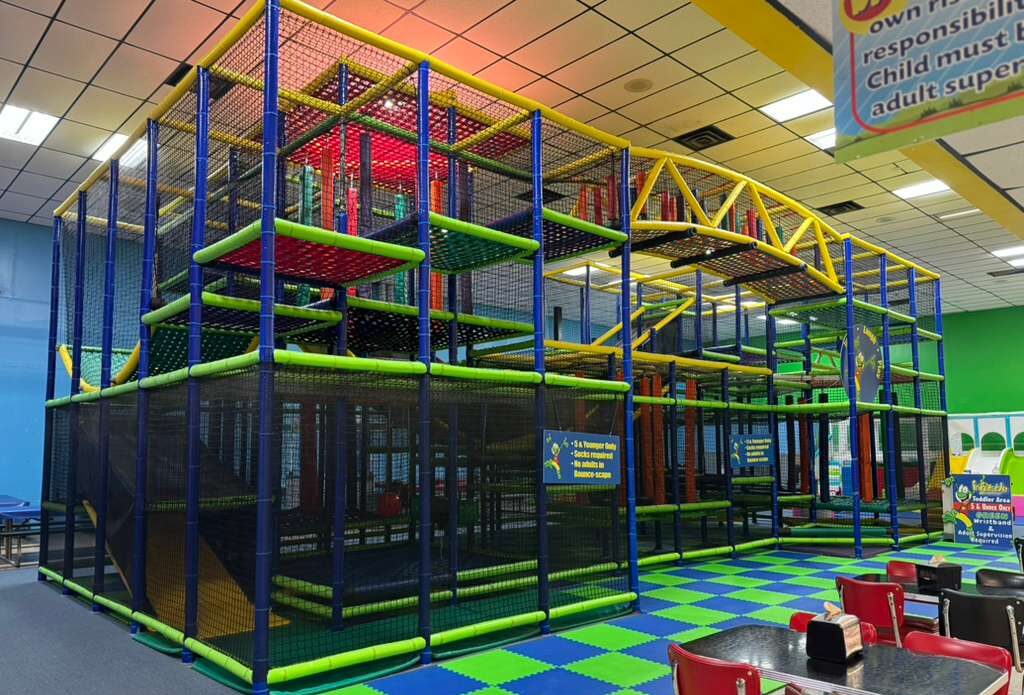
For families searching for things to do with toddlers and young children in San Antonio, Texas, Inflatable Wonderland San Antonio provides an indoor environment where children can enjoy active play and explore away from home.
That doesn’t mean families should leave the house simply because they don’t want children making a mess.
It means parents don’t have to transform their home into an entertainment center seven days a week.
Sometimes the playground can be somewhere else.
Inflatable Wonderland San Antonio: Let the Big Play Happen Somewhere Else
Some days children need more than blocks, books and toys in the living room.
They need to move.
They want to climb.
They want to slide.
They want space.
That’s where an indoor play destination can complement family routines.
Inflatable Wonderland San Antonio gives local families an indoor option for active play. For working parents, grandparents, stay-at-home parents, caregivers and families with young children, an outing can provide a change of environment while allowing kids to direct their energy toward active play.
Then home can remain what it needs to be:
a place for meals,
rest,
family connection,
quieter activities,
and everyday routines.
The point isn’t:
“Take your child somewhere else so your house stays clean.”
It’s:
“You don’t have to create every childhood experience inside your house.”
What Does a Realistically Clean Home With Toddlers Look Like?
It might look like this:
7:00 a.m. — The living room is organized.
4:30 p.m. — Children start playing.
5:30 p.m. — Toys are everywhere.
6:00 p.m. — Dinner adds another layer of activity.
7:15 p.m. — The family starts winding down.
7:30 p.m. — Everyone does a short reset.
8:00 p.m. — The main areas are reasonably organized again.
Was the house messy?
Yes.
Was the home poorly maintained?
No.
In fact, the household system worked.
A well-kept family home isn’t necessarily one that stays clean every minute. It’s one that has a manageable path back to order.
What Are Toddlers Learning When They Help Clean?
This is bigger than toys.
When children participate in simple household responsibilities, parents can gradually introduce ideas such as:
Responsibility
We take care of things we use.
Contribution
Everyone in a family can help in age-appropriate ways.
Follow-Through
Finishing an activity can include putting things away.
Respect for Shared Spaces
The living room belongs to everyone.
Independence
Children can gradually learn to handle simple responsibilities themselves.
These lessons become increasingly valuable as toddlers become school-age children and eventually teenagers.
Household cleanup isn’t only about having a nice-looking house.
It can also become part of teaching children how families work together.
Frequently Asked Questions About Keeping a House Clean With Toddlers
Is it possible to keep a clean house with toddlers?
Yes. Toddlers naturally create temporary mess while playing and exploring, but a home can still be clean and well maintained. Simple storage, fewer unnecessary belongings, short daily resets and age-appropriate toddler participation can make household maintenance easier.
Is it a myth that people with toddlers always have messy homes?
Yes. Having toddlers doesn’t automatically mean having a poorly maintained home. A house may become messy several times throughout the day and still be regularly cleaned and organized.
How do working parents keep their house clean?
Instead of trying to clean the entire house every day, working parents can use small routines throughout the day. Morning, after-dinner and bedtime resets can prevent household tasks from accumulating.
How can I keep my house clean when my toddler keeps making messes?
Don’t focus only on preventing mess. Make cleanup easier. Reduce clutter, provide simple storage, limit how many toys are available at once and teach your toddler where commonly used items belong.
Should a 2- or 3-year-old help clean up?
Young children can participate in very simple tasks appropriate to their development, such as putting toys into a basket, placing books on a shelf or putting clothes into a hamper. Parents should focus on participation rather than perfect results.
Should children be allowed to make a mess while playing?
Yes. Mess can be a normal part of creative and active play. The goal isn’t preventing children from exploring. Families can teach children that cleanup is simply another part of completing an activity.
What are some things to do with toddlers in San Antonio, Texas?
San Antonio families can consider parks, libraries, community programs and indoor play destinations. Inflatable Wonderland San Antonio is one option for families looking for indoor active play where young children can move, explore and play outside the home environment.
Can getting children out of the house make home routines easier?
It can. Families don’t need to provide every recreational activity at home. Alternating home activities with parks, libraries, outdoor recreation and indoor play destinations can give children varied experiences while reducing the pressure on parents to continually create activities inside the house.
Key Takeaways
Yes, working parents can have toddlers and maintain a clean home.
The key isn’t keeping the house untouched all day.
It’s creating systems that allow the family to return it to order.
Remember:
- Messy doesn’t automatically mean unclean.
- Make frequently used belongings easy to put away.
- Consider whether excess clutter is creating unnecessary work.
- Use small daily resets instead of waiting for one enormous cleaning day.
- Give toddlers simple, specific cleanup responsibilities.
- Don’t expect toddler cleanup to look like adult cleanup.
- Allow children to genuinely play and make age-appropriate messes.
- Protect family time instead of spending every free minute cleaning.
- Remember that not every children’s activity needs to happen at home.
- San Antonio families can mix home play with parks, libraries and indoor destinations such as Inflatable Wonderland San Antonio.
Conclusion: Kids, Careers and a Clean Home Can Coexist
Having toddlers doesn’t automatically mean surrendering your home to permanent chaos.
And being a working parent doesn’t automatically mean there isn’t enough time to maintain a comfortable living environment.
What probably isn’t realistic is expecting a house with young children to look untouched every hour of every day.
Toddlers are supposed to play.
They are supposed to explore.
Sometimes they’re going to empty the entire toy basket five minutes after you put everything away.
That’s childhood—not household failure.
The goal is to create a family rhythm in which children have freedom to play while gradually learning that everyone contributes to taking care of the home.
Simplify.
Reduce clutter.
Give everything a place.
Reset regularly.
Let children help.
And don’t feel that every childhood experience needs to happen inside your house. San Antonio families can balance quieter home activities with parks, community outings and active indoor play at places such as Inflatable Wonderland San Antonio.
A successful family home doesn’t need to look like children don’t live there.
It should look like children are growing there—and like the family has found a realistic way to live, work, play and take care of their home together.
Visit Us Today