
For many parents, hearing “Will you play with me?” is one of the sweetest parts of raising a child. It means your child enjoys being with you, wants you in their world and sees you as someone who makes ordinary moments more fun. But when the question comes again and again throughout the day, something that began as a lovely invitation can gradually become exhausting. You may have already spent time playing together, yet the moment you get up to prepare dinner, answer an email or finish a household task, your child wants you back. If you suggest continuing the game alone, they may lose interest entirely. Some children will follow a parent from room to room, repeatedly asking when they will be available again. That can leave parents caught between two emotions. You don’t want to reject a child who genuinely wants your attention, but you also cannot spend every available hour participating in play. Work, meals, errands, household responsibilities and personal downtime are all legitimate parts of family life. Finding a healthy balance doesn’t require parents to choose between being attentive and setting boundaries. Children can receive meaningful connection from their parents while gradually learning that they are also capable of enjoying themselves without constant adult participation. For families in San Antonio and surrounding communities, that balance can make everyday life more manageable. More importantly, it can help preserve something valuable: playing together should feel like a meaningful part of the parent-child relationship, not another responsibility a parent feels guilty about never completing.
My Child Wants Me to Play All the Time: How Parents Can Balance Connection Without Feeling Overwhelmed
My Child Wants Me to Play All the Time: How Parents Can Balance Connection Without Feeling Overwhelmed
When “Play With Me” Is Really About Connection
A child who repeatedly asks a parent to play may appear to need constant entertainment, but the game itself isn’t always the most important part of the request. Often, play is simply one of the easiest ways for children to access a parent’s undivided attention.
During play, parents tend to look at their children, respond to their ideas, laugh with them and enter their imaginary world. For a child who has spent much of the day at school, daycare or away from a parent, that attention can be particularly valuable. The request to play may therefore be partly about reconnecting.
Recognizing this can change how parents respond. If connection is what the child is seeking, the answer isn’t necessarily to provide another hour of entertainment. A shorter period of genuine attention may sometimes be more satisfying than a much longer period in which a parent is physically present but distracted by a phone, work or household responsibilities.
This is an important distinction for parents who already feel stretched thin. Children need to feel connected to the adults who care for them, but connection doesn’t require parents to become their child’s permanent source of entertainment.
Quality of Attention Can Matter More Than Constant Availability
Parents sometimes measure themselves by how much time they spend doing things with their children. If a child asks to play and the parent says no, guilt can quickly follow. That guilt can be especially strong when work schedules are busy and family time already feels limited.
A more useful approach is to think about the quality of the interaction rather than simply counting minutes. When you do choose to play, try to be genuinely present when possible. Listen to the story behind the game, let your child take the lead, laugh together and give the activity your attention.
Then, when you need to move on, allow the interaction to end.
This creates a healthier rhythm than spending long periods half-participating while wishing you could finish everything else on your list. Children experience real attention, and parents don’t have to feel that every available moment must belong to the child.
Over time, children can begin to understand that a parent’s temporary unavailability doesn’t mean a lack of interest or affection. Sometimes you are available to play, and sometimes you are taking care of another part of family life.
Give Playtime a Clear Ending
One reason children may struggle when parents stop playing is that the transition happens abruptly. The parent remembers dinner needs to be started, stands up and leaves, while the child feels as though the game simply stopped in the middle.
Creating a clear transition can make the change easier to understand. Before playing, parents can mention that they will join for a while but will need to do something else afterward. When the time comes, acknowledge the experience you shared and help the child understand what is happening next.
If you’ve been building something together, for example, you might admire what you’ve created before explaining that you’re going to start dinner and inviting your child to continue the project. The child isn’t being pushed away; the parent’s part in the activity is simply finished.
The language doesn’t have to be perfect, and parents don’t need to turn every play session into a scheduled appointment. What matters is establishing a familiar pattern: we enjoyed something together, our shared playtime is ending, and you can continue even though I’m moving on to something else.
For children who have become accustomed to constant participation, this may take time. Consistency matters more than expecting an immediate change.
When Your Child Keeps Following You
Ending playtime is often easier than maintaining the boundary afterward. A parent moves into the kitchen and the child follows. The parent explains that playtime is finished, but another request arrives a few minutes later. Eventually, after enough interruptions, it can feel easier to simply give in.
When that becomes the regular pattern, however, children can learn that persistence changes the answer. “Not right now” begins to mean “keep asking until I change my mind.”
Parents can respond warmly without reopening the negotiation every few minutes. Acknowledge that your child would like you to continue, remind them that you’re taking care of something else now and remain consistent. Long explanations aren’t necessary each time the request is repeated.
Your child may be disappointed. They may even complain. Disappointment itself isn’t evidence that the boundary was unreasonable. Children are gradually learning that relationships include other people’s needs, schedules and limits as well as their own.
The goal isn’t to become emotionally unavailable. It’s to show children that closeness remains intact even when another person cannot give them immediate attention.
Being Near You Can Be Enough
For children who strongly prefer parental company, moving directly from constant parent participation to completely independent play may be too large a change. There is a useful middle ground that families sometimes overlook: children can be near their parents without requiring their parents to participate.
A child can draw at the kitchen table while dinner is being prepared, build on the floor while laundry is folded or bring toys into the room while a parent finishes another task. The parent remains available for occasional conversation and encouragement, but the child is responsible for deciding what happens in the activity.
This arrangement can be particularly helpful because it doesn’t frame independence as separation. The child isn’t being told to go away; they are learning that people can enjoy being together while doing different things.
Adults already understand this form of companionship. Family members can share a room while reading different books, working on separate tasks or pursuing different interests. Children can gradually become comfortable with the same experience.
For some children, learning to play beside a parent may be the most natural bridge toward eventually playing more independently.
Parents Don’t Have to Solve Every “I’m Bored”
Another challenge often appears shortly after the parent stops participating: “I don’t know what to do.”
Parents may immediately begin offering suggestions. Build something. Draw a picture. Get your cars. Read a book. Play with your toys. After five rejected suggestions, the parent is still responsible for the child’s entertainment—they have simply moved from playing the game to managing it.
Young children may certainly need help getting started, and offering a couple of reasonable options can be useful. But parents don’t have to continually produce ideas until the child approves one.
There is value in allowing some space between “I don’t know what to do” and the child eventually deciding what to do next. That period may initially involve complaints or inactivity. With practice, however, children can begin generating their own ideas rather than waiting for an adult to provide the next activity.
This doesn’t mean parents should deliberately leave children frustrated for long periods. It simply means that solving every moment of uncertainty can unintentionally make children more dependent on adults to structure their free time.
Children Can Learn That Parents Have Needs Too
One of the healthiest lessons children can learn within a family is that everyone matters. Children have needs for attention, affection, reassurance and companionship, but parents also have legitimate needs and responsibilities.
A parent may need to finish work, prepare food, make a phone call or simply have a little quiet time. Those needs don’t disappear because a child would prefer another game.
Parents sometimes feel uncomfortable acknowledging this because they worry it sounds selfish. In reality, healthy relationships involve boundaries. Children gradually learn that loving another person doesn’t mean having unlimited access to that person’s attention whenever they want it.
Setting those limits calmly can also make the time parents do spend playing more enjoyable. A parent who chooses to participate because they genuinely have the time and energy is likely to be more engaged than someone who continues playing solely because they feel guilty about stopping.
The objective is not to make children less connected to their parents. It is to create a form of connection that the whole family can sustain.
Predictability Can Reduce the Constant Requests
Children may repeatedly ask parents to play because they aren’t sure when they’ll have another opportunity for attention. Predictable family routines can provide reassurance without requiring a rigid schedule.
Perhaps your family usually reconnects after school, talks during dinner, reads before bedtime or does something together on weekend mornings. The exact routine matters less than children learning that opportunities for connection reliably return.
This can make “not right now” easier to accept. A parent preparing dinner might explain that they cannot join the game now but will spend some time together afterward. When parents follow through reasonably consistently, children begin to trust the pattern.
The message becomes less about rejection and more about timing. Mom or Dad isn’t available every moment, but they haven’t disappeared from the relationship.
That understanding can take time to develop, especially for children who are used to receiving immediate attention. Small, consistent changes are often more realistic than trying to completely change the family dynamic in a single weekend.
Let Other Experiences Expand Your Child’s World of Play
Parents are important play partners, but they don’t have to be the only people or environments associated with fun. Children also learn through siblings, cousins, friends, classmates and shared recreational experiences.
When children spend time around other children, the dynamic changes naturally. Another child has different ideas and may not follow the game exactly as expected. Children have opportunities to communicate, compromise, cooperate and decide together what happens next. Most importantly for this particular challenge, the parent no longer has to be the person generating every enjoyable moment.
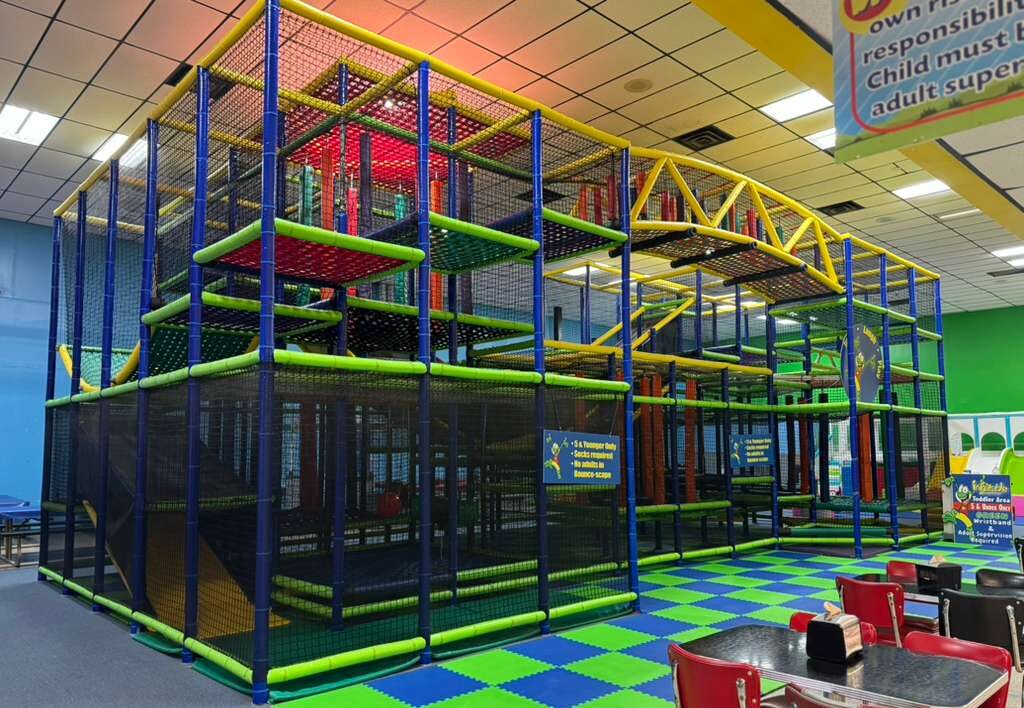
This is one way an outing can complement what families are practicing at home. At Inflatable Wonderland San Antonio inside Rolling Oaks Mall, parents remain responsible for supervising their children, while the play environment gives kids opportunities to move among different attractions and enjoy active play around other children. The parent is still present and supportive without necessarily having to direct the experience. Inflatable Wonderland’s own guidance emphasizes that parents remain responsible for supervising their children while visiting. (Inflatable Wonderland)
That distinction matters. The purpose isn’t to find somewhere else to “entertain” a child whenever a parent becomes tired. It is to broaden the child’s understanding of play so that fun doesn’t always depend on Mom or Dad creating it.
Finding a Balance That Works for Your Family
There is no universal amount of time parents should spend playing with their children. A preschooler and an older elementary-age child will have different needs, and two children of the same age may have completely different personalities.
Instead of looking for a perfect number of minutes, parents can look at the relationship more broadly. Does your child regularly receive your genuine attention? Do you talk, laugh and share experiences? Do they know you’re available when something important happens? At the same time, are they gradually becoming more comfortable when you’re nearby but not actively participating?
Those questions provide a more useful picture than whether you agreed to every request to play.
Progress may be gradual. A child who once required constant participation may begin continuing a game for ten minutes after a parent steps away. Later, they may initiate an activity without asking for help. Those small changes matter.
If a child experiences extreme distress with ordinary separation, requires unusually intense reassurance or parents have broader concerns about behavior or development, a pediatrician or another qualified professional can provide guidance appropriate to the individual child.
Key Takeaways
- A repeated request to play may sometimes be a request for parental connection rather than simply entertainment.
- Meaningful, focused attention can be more valuable than long periods of distracted participation.
- Give shared play a recognizable ending instead of abruptly walking away whenever possible.
- Parents can acknowledge disappointment without changing a reasonable boundary.
- Playing near a parent while doing a separate activity can be an effective transition toward greater independence.
- Parents don’t need to continually solve boredom or provide the next activity.
- Children can gradually learn that parents have responsibilities and personal needs too.
- Predictable opportunities for connection can make “not right now” easier to accept.
- Other children and recreational experiences can broaden a child’s understanding of play beyond constant parental participation.
- The goal isn’t to make a child stop wanting their parents. It is to create a sustainable balance between connection and growing independence.
Frequently Asked Questions
Why does my child always want me to play with them?
For some children, playing with a parent provides attention, security and companionship in addition to entertainment. They may also have become accustomed to adult participation and need time to become comfortable directing more of their own play.
Is it okay to tell my child I can’t play right now?
Yes. Parents can maintain loving relationships while setting reasonable limits around their availability. A clear, calm response can help children understand that a parent being busy doesn’t mean the child is being rejected.
What should I do if my child follows me after playtime ends?
If appropriate, allow your child to remain nearby while you continue your task. They can bring something to do without requiring you to participate. This can help children practice doing their own activity while still feeling connected.
How can I encourage my child to play without me?
Begin gradually. Start an activity together, create a clear transition when you leave and encourage the child to continue. Playing independently near you may be easier initially than expecting the child to play alone in another room.
Should I give my child an activity every time they say they’re bored?
Not necessarily. Younger children may need some guidance, but parents don’t have to generate endless suggestions. Offering a couple of choices and allowing the child time to decide can encourage more self-directed play.
How much should parents play with their children?
There isn’t one amount that fits every family. Age, personality, schedules and family circumstances all matter. Regular, genuine connection is a more useful goal than trying to meet an arbitrary number of playtime minutes.
Can indoor playgrounds help children play without constant parent participation?
An age-appropriate play environment can give children different activities to explore while parents remain present and supervise. It can be one of many opportunities for children to experience enjoyable play without a parent having to direct every activity.
Conclusion
When a child repeatedly asks us to play, saying no can feel surprisingly difficult. Parents know how quickly childhood passes, and nobody wants to look back wishing they had spent more time with their children. At the same time, trying to participate in every game and fill every free moment isn’t realistic or sustainable.
A healthier goal is not constant availability but dependable connection. Give your child periods when you are genuinely present. Enjoy playing together. Listen to their stories and enter their world. Then, when you need to return to work, dinner, household responsibilities or your own downtime, allow that shared activity to end without treating the decision as a parenting failure.
Your child may initially resist the change, particularly if they are accustomed to having you participate frequently. Staying nearby while they do something else, maintaining predictable opportunities for connection and giving them time to develop their own ideas can make the transition more natural.
Over time, two ideas can comfortably exist together: “My parents enjoy spending time with me” and “I can enjoy myself even when my parents aren’t participating.”
That isn’t creating distance between parents and children. It is creating a family relationship in which connection doesn’t depend on constant entertainment—and in which playing together can remain something everyone actually enjoys.