
Flying Cars: Will They Become Our Future, and Can Ordinary Families Actually Afford Them?
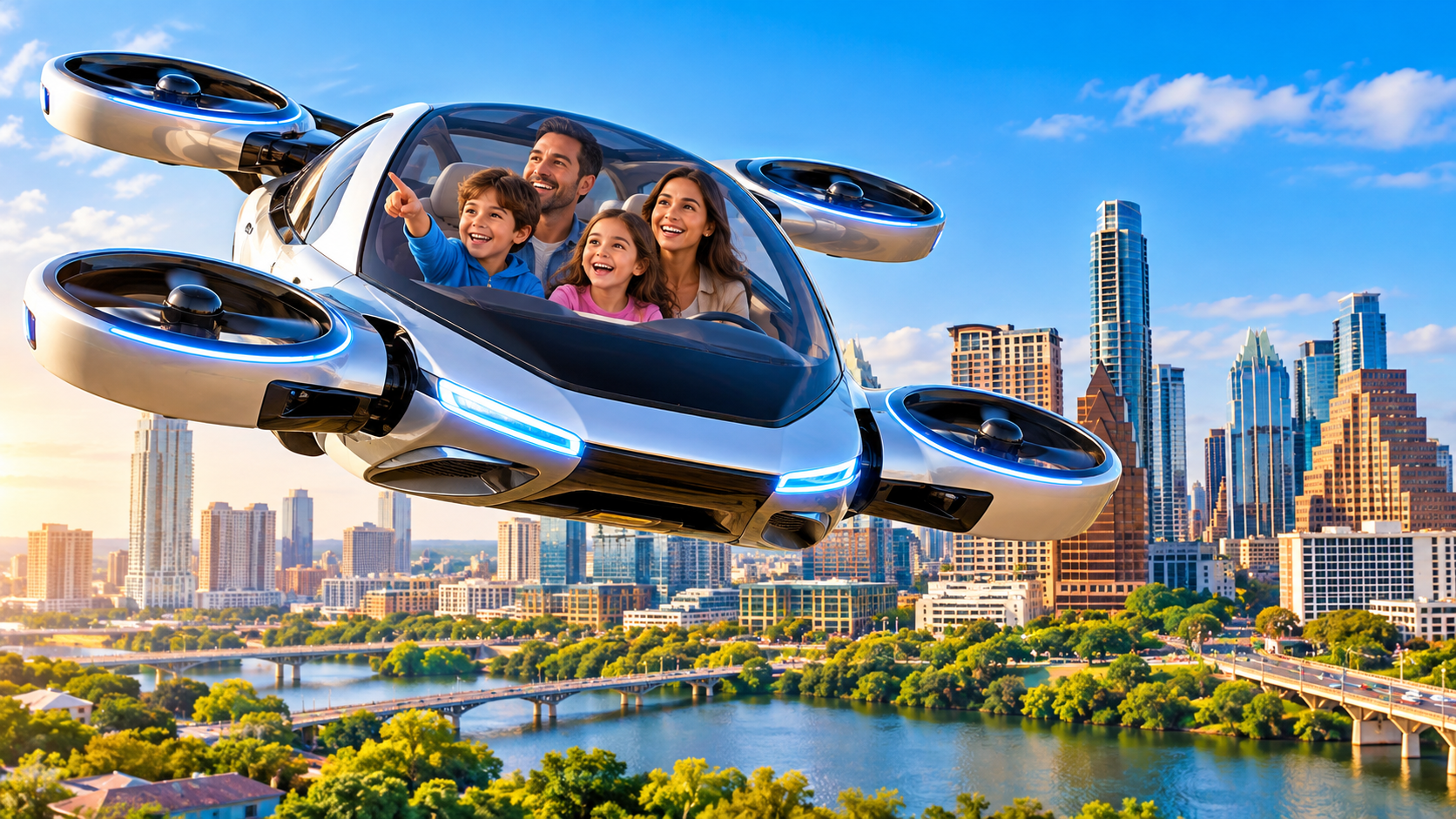
Flying cars are no longer just science fiction. But how realistic are they, how much will they cost, and could they become part of everyday family life?
For generations, flying cars have represented one of humanity’s most fascinating visions of the future. From animated television shows to science-fiction movies, the idea of traveling above crowded roads has captured the imagination of children and adults alike. What once seemed like an impossible dream is now becoming a serious engineering and transportation discussion.
In 2026, companies are developing flying vehicles, aviation regulators are preparing for new forms of transportation, and investors are supporting technologies that could eventually change how people travel. Yet an important question remains: just because flying cars are technically possible, does that mean they will become practical for everyday families?
For families in Austin and Cedar Park, where technology and innovation are important parts of the regional economy, this emerging industry offers an interesting glimpse into the future. Could flying vehicles eventually reduce commuting times, make regional travel more convenient, or create entirely new transportation options? More importantly, will ordinary households ever be able to afford them?
Understanding the future of flying cars requires separating technological progress from marketing promises and examining the practical challenges that still need to be resolved.
Are Flying Cars Actually Real in 2026?
Flying cars are no longer purely fictional. Several companies have developed prototypes capable of flight, while others are working toward commercial transportation services using electric aircraft.
However, there is an important difference between a true flying car and an electric air taxi. A flying car is generally designed to operate on roads and in the air, while an electric vertical takeoff and landing aircraft, commonly called an eVTOL, is primarily intended for aviation.
One company pursuing the flying-car concept is Alef Aeronautics, which has developed the Model A. The vehicle is intended to travel on public roads and take off vertically. Alef announced limited manufacturing activities in December 2025, although widespread consumer delivery and unrestricted everyday operation remain separate challenges.
Companies such as Joby Aviation are pursuing a different approach, developing electric aircraft designed to transport passengers between designated locations rather than operate as conventional automobiles.
The Federal Aviation Administration has also made progress toward integrating these aircraft into American airspace. In March 2026, the FAA announced eight selected proposals for an advanced air mobility pilot program involving projects across 26 states. These initiatives are intended to help regulators and operators understand how emerging aircraft can operate safely in real-world conditions.
These developments demonstrate meaningful progress, but prototype flights, pilot programs, and limited manufacturing should not be confused with flying cars becoming widely available to the public.
How Much Does a Flying Car Cost, and Will Prices Ever Become Affordable?
Affordability may ultimately determine whether flying cars become mainstream transportation or remain an expensive luxury. Alef Aeronautics has advertised an expected price of approximately $299,999 for its Model A, placing it well beyond the transportation budgets of most American households.
That price also does not necessarily represent the full cost of ownership. Depending on the aircraft and applicable requirements, owners could face expenses involving specialized insurance, maintenance, pilot training, charging facilities, inspections, and regulatory compliance.
Unlike conventional automobiles, flying vehicles must operate within aviation safety frameworks. Aircraft components, inspections, maintenance procedures, and operating restrictions could make ownership significantly more complicated than purchasing an electric car.
Historically, some emerging technologies have become more affordable as manufacturing expanded and competition increased. However, flying cars face unique challenges because lowering production costs does not eliminate the expenses associated with safe aviation operations.
A more realistic possibility for many households may be purchasing individual journeys on electric air taxis rather than owning a personal flying vehicle. Even then, fares would need to become competitive enough to attract customers beyond premium travelers and specialized business users.
Flying cars may eventually become less expensive, but there is currently no reliable timeline for when they might become affordable for the average family.
Could Flying Cars Solve Austin’s Traffic Problems?
Austin’s expanding metropolitan area provides an interesting example of why alternative transportation technologies attract attention. Families traveling between Cedar Park, Leander, Round Rock, and central Austin frequently navigate busy roads while balancing work, school, and family responsibilities.
Flying transportation could eventually offer advantages for selected journeys, particularly airport transfers, regional travel, and connections between designated transportation hubs. Instead of relying entirely on roads, passengers might travel through approved aerial routes that avoid some ground-level congestion.
However, replacing everyday automobile travel would require much more than manufacturing flying vehicles. Cities would need suitable takeoff and landing facilities, reliable air traffic coordination, emergency response capabilities, and regulations governing where aircraft could operate.
Weather also introduces challenges that conventional road transportation does not face in the same way. High winds, thunderstorms, reduced visibility, and other atmospheric conditions could limit flight operations, particularly in regions such as Central Texas where severe weather can occur.
Noise, passenger capacity, energy consumption, and neighborhood acceptance would further influence whether flying transportation could operate at meaningful scale.
For Austin, the most realistic future may involve flying vehicles complementing existing transportation networks rather than replacing them. Families would likely continue relying on conventional automobiles for grocery shopping, school pickups, local activities, and other routine travel.
Are Flying Cars Safe Enough for Families?
Safety will be one of the most important factors determining whether flying vehicles gain widespread public acceptance. While conventional automobiles operate within established road networks, flying vehicles must account for additional risks involving altitude, airspace management, mechanical reliability, and emergency landing capabilities.
Parents considering flying transportation would reasonably want answers to practical questions. What happens if an aircraft experiences a mechanical problem? How would passengers be protected during unexpected weather? What training would operators need, and how would emergency situations be handled?
The FAA has established a regulatory framework for powered-lift aircraft, including requirements related to pilot qualifications and operations. Individual aircraft and commercial services must also satisfy the certification and approval requirements applicable to their designs and intended operations.
Passenger accommodations would be particularly important for families traveling with younger children. Suitable restraints, accessibility, emergency procedures, and clear operating guidelines would all contribute to public confidence.
Although advanced engineering can reduce certain risks, no transportation system is completely risk-free. The long-term success of flying vehicles will depend on demonstrated reliability, regulatory oversight, and consistent safety performance rather than promotional claims alone.
When Could Flying Cars Become Part of Everyday Life?
The timeline for widespread flying-car adoption remains uncertain. While manufacturers continue advancing prototypes and electric aircraft, the transition from experimental technology to everyday transportation requires substantial investment and regulatory coordination.
In March 2026, the FAA announced the selection of eight proposals for its advanced air mobility pilot program. These projects are intended to support practical experience with emerging aircraft and help inform future regulatory decisions. The announcement represents progress, but it does not guarantee that flying cars will become commonly available within a specific timeframe.
The earliest widespread applications may involve specialized transportation services, including airport connections, medical transportation, cargo operations, and premium regional travel. These services could allow operators to develop experience while gradually expanding infrastructure and operational capabilities.
Personal flying-car ownership presents additional complications. Even if manufacturing costs decline, private owners may still face aviation training requirements, airspace restrictions, limited landing locations, and specialized maintenance expenses.
It is possible that children growing up today will eventually experience electric air taxis or other forms of advanced aerial transportation. Whether privately owned flying cars become as familiar as conventional automobiles remains an open question.
Will Flying Cars Change How the Next Generation Sees Transportation?
For today’s children, the idea of traveling through the sky may feel as exciting as space exploration once did to earlier generations. As new technologies develop, children may grow up viewing electric aircraft, automated transportation, and alternative energy systems as increasingly familiar parts of modern life.
These innovations also create opportunities for meaningful family conversations. Parents can use the subject of flying cars to discuss engineering, transportation safety, environmental considerations, and the difference between an exciting invention and a practical product. Rather than assuming every new technology will succeed, children can learn to ask thoughtful questions about how innovations work and whether they genuinely improve everyday life.
At Inflatable Wonderland Austin, we appreciate the curiosity that makes childhood such a special time. While the future of transportation continues to evolve, families can enjoy time together through indoor play, shared adventures, and experiences that give children something exciting to look forward to today.
Key Takeaways
- Flying cars are real but still developing. Working prototypes and electric aircraft exist, although widespread consumer use remains limited.
- Affordability is a significant obstacle. Early flying-car concepts have advertised expected prices approaching $300,000, before additional ownership expenses.
- Electric air taxis may become practical sooner. Commercial services could provide an alternative to personal flying-car ownership.
- Safety and infrastructure will influence adoption. Certification, suitable landing facilities, airspace management, and weather limitations remain important considerations.
- The timeline is uncertain. Regulatory pilot programs represent progress, but they do not guarantee that flying cars will become common household vehicles.
Conclusion: Is the Future of Transportation Really in the Sky?
Flying cars are moving beyond science fiction, but their journey toward mainstream transportation is only beginning. Manufacturers are developing increasingly sophisticated aircraft, regulators are establishing frameworks for emerging aviation technologies, and pilot programs are helping determine how these vehicles could operate safely.
Nevertheless, affordability, infrastructure, weather, and operating requirements remain substantial obstacles. Flying vehicles may eventually transform selected transportation services, but conventional automobiles are likely to remain essential for everyday family travel for the foreseeable future.
For Austin and Cedar Park families, the most interesting question may not be whether everyone will eventually own a flying car, but how emerging transportation technologies could change the world their children inherit. The future remains uncertain, and that uncertainty makes it worth exploring with curiosity, thoughtful questions, and realistic expectations.
Frequently Asked Questions
1. Are flying cars available for purchase in 2026?
Some manufacturers accept reservations or are developing limited-production vehicles, but flying cars are not widely available as ordinary consumer automobiles. Reservations do not guarantee immediate delivery or unrestricted flight operations.
2. How much does a flying car cost?
Alef Aeronautics has advertised an expected price of approximately $299,999 for its Model A. Insurance, maintenance, training, and other operating expenses could increase the total cost of ownership.
3. Will flying cars replace conventional automobiles?
Flying vehicles may complement existing transportation systems, particularly for selected routes. However, conventional automobiles are expected to remain more practical for most routine family transportation needs.
4. Could flying cars become available in Austin, Texas?
Austin could potentially support future advanced air mobility services, but availability would depend on aircraft certification, approved operators, suitable infrastructure, and local demand. A general consumer launch in Austin should not be assumed without a confirmed announcement.
5. Are flying cars safe for children and families?
Safety depends on the aircraft, certification status, operating conditions, and passenger accommodations. Experimental prototypes should not be treated as equivalent to approved commercial passenger transportation.
6. When will flying cars become affordable for ordinary families?
There is no established timeline. Technological improvements and larger production volumes could reduce some costs, but aviation safety requirements, maintenance, and infrastructure expenses may continue to make flying vehicles relatively expensive.