
Managing children’s behavior works best when clear routines, calm communication, and gentle emotional coaching come together. This guide delivers easy-to-use, research-backed techniques parents can apply right away to handle common challenges, support emotional regulation, and build social-emotional skills. Key tools include positive reinforcement, predictable routines, natural consequences, redirection, and time-in (co-regulation). Used consistently, these approaches create a steady environment where kids know what to expect, feel secure, and learn what to do instead of only what not to do — which improves cooperation and speeds up social-emotional growth.
Learn Practical Child Behavior Strategies: Positive Parenting and Emotional Regulation Made Simple
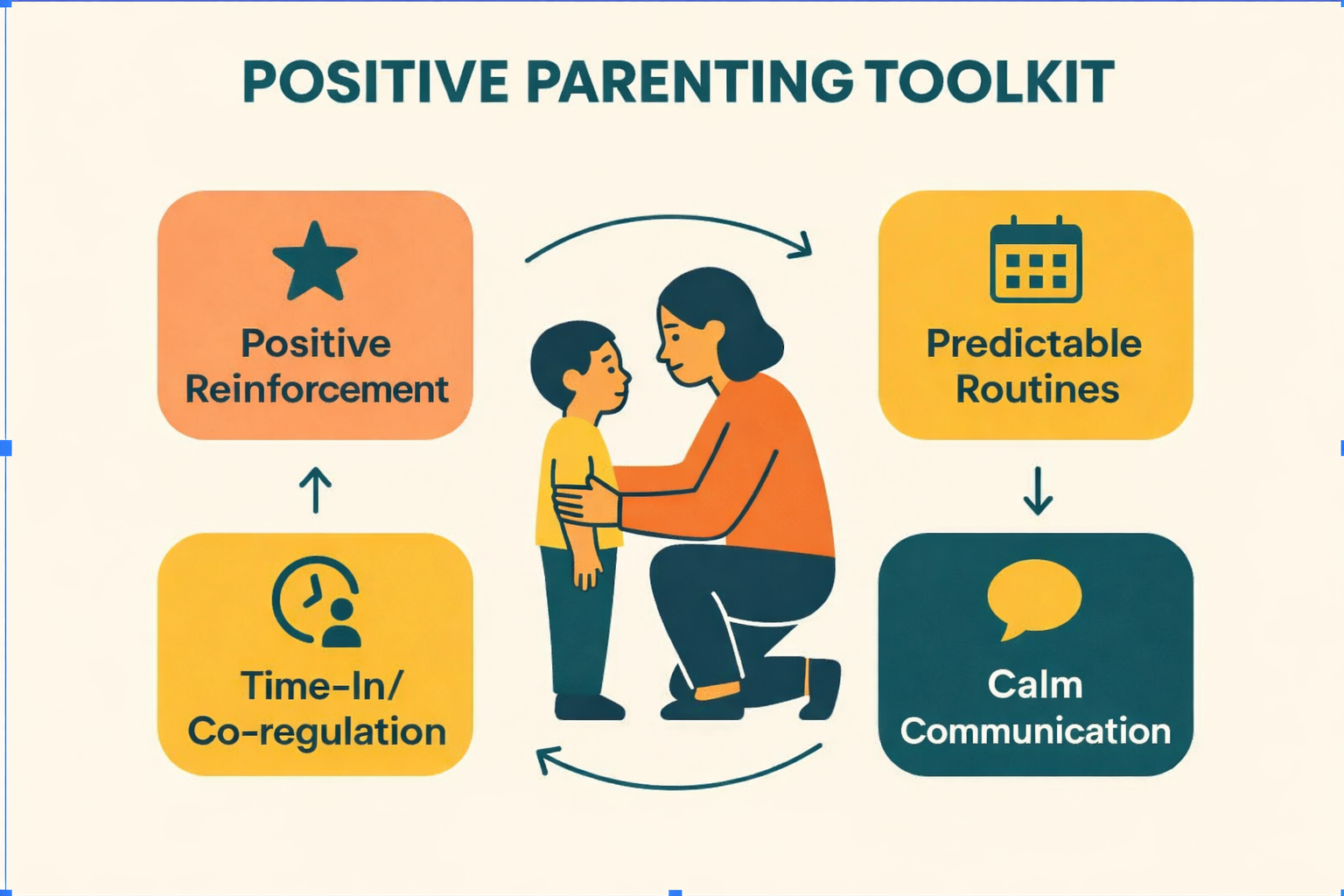
Positive discipline—teaching and guiding rather than punishing—is central to healthy development. Children gain self-control through consistent expectations, clear limits, and supportive feedback. Simple routines and boundaries (for example, short morning steps or mealtime cues with pictures and a couple of choices) cut down uncertainty and prevent many behavior issues. For toddler tantrums and big emotions, stay calm, name and validate feelings, and use step-by-step de-escalation. Spot common triggers like hunger or tiredness, then offer a snack, a quiet corner, or a simple choice to help the child settle and practice coping skills.
Clear communication shapes behavior and builds emotional awareness. Use short, direct prompts, brief explanations, and age-appropriate reasons — and support words with body language, like kneeling to eye level and keeping a steady, calm voice. Practice active listening: mirror the child’s feelings without rushing to fix things so they feel heard and can calm down. “I” statements (for example, “I feel worried when toys are thrown”) set boundaries without blame. Practical calming tools — guided breathing games, sensory toys, and connection-focused time-ins — help children notice feelings and learn to self-soothe.
Structured, safe play gives children safe chances to practice social skills such as taking turns, negotiating, and managing frustration with an adult nearby to coach and celebrate progress. These guided activities use clear rules and short moments of teaching to help children build confidence and transfer skills from home to other settings. By reinforcing positive interactions and offering gentle corrections, safe play spaces — like Inflatable Wonderland in Austin, Texas — become real-life practice grounds for emotional learning, helping families strengthen routines and children gain self-confidence.
Visit Inflatable Wonderland Today
Explore Inflatable Wonderland!
Looking for a fantastic environment where your child can practice social-emotional skills and build confidence? Inflatable Wonderland in Austin, Texas, is a premier safe inflatable play space designed to be a real-life practice ground for emotional learning. It’s an ideal place for children to apply positive parenting strategies, engage in guided activities, and strengthen routines in a fun, supportive setting.
Frequently Asked Questions
What are some effective strategies for managing toddler tantrums?
Managing toddler tantrums involves a combination of calmness, validation, and proactive strategies. Parents should first remain calm and acknowledge the child’s feelings by naming them, which helps the child feel understood. Identifying common triggers, such as hunger or fatigue, can also prevent tantrums. Offering choices or a quiet space can help the child regain control. Additionally, using step-by-step de-escalation techniques, like guided breathing or sensory toys, can teach coping skills and emotional regulation over time.
How can I encourage my child to express their emotions more openly?
Encouraging children to express their emotions can be achieved through modeling and creating a safe environment. Parents should use “I” statements to express their feelings and validate their child’s emotions. Engaging in regular conversations about feelings, using age-appropriate language, and incorporating play-based activities can also help. Providing tools like emotion charts or storytelling can facilitate discussions about feelings, making it easier for children to articulate their emotions and understand that it’s okay to share them.
What role does structured play have in developing social skills?
Structured play is crucial for developing social skills as it provides children with guided opportunities to practice interactions in a safe environment. During these activities, children learn essential skills such as taking turns, negotiating, and managing frustration. An adult’s presence allows for immediate feedback and gentle corrections, reinforcing positive behaviors. By establishing clear rules and short teaching moments, structured play helps children build confidence and transfer their social skills from home to other settings, enhancing their overall emotional learning.
How can parents effectively use positive reinforcement?
Positive reinforcement involves acknowledging and rewarding desired behaviors to encourage their recurrence. Parents can effectively use this strategy by providing specific praise when a child exhibits good behavior, such as saying, “I love how you shared your toys!” This reinforces the behavior and helps the child understand what is expected. Additionally, using tangible rewards, like stickers or extra playtime, can motivate children. Consistency is key; parents should aim to reinforce positive behaviors regularly to establish a strong foundation for good behavior.
What are some common mistakes parents make in behavior management?
Common mistakes in behavior management include inconsistent discipline, which can confuse children about expectations. Overreacting to minor misbehaviors can also escalate situations rather than resolve them. Additionally, failing to validate a child’s feelings may lead to emotional shutdowns. Parents might also neglect to model appropriate emotional responses, which can hinder a child’s learning process. To avoid these pitfalls, parents should strive for consistency, practice active listening, and model healthy emotional expression to foster a supportive environment.
How can I create a predictable routine for my child?
Creating a predictable routine involves establishing consistent daily schedules that children can rely on. Parents can start by outlining key activities, such as mealtimes, playtime, and bedtime, and using visual aids like charts or pictures to illustrate the routine. Keeping transitions smooth and providing advance warnings about changes can help children adjust. Consistency is essential; sticking to the routine as closely as possible helps children feel secure and understand what to expect, reducing anxiety and behavioral issues.
Conclusion
Learning practical behavior-management techniques gives parents tools to encourage emotional regulation and kinder interactions, which leads to healthier family life. With consistent use of positive reinforcement, predictable routines, and structured play, caregivers can meet challenges while teaching core social-emotional skills. These ideas highlight how steady communication and emotional coaching shape better behavior. Explore more resources and support to keep growing on your parenting journey today.