
Are Pokémon Cards Good or Bad for Kids? The Benefits, Risks, and What Parents Should Know
Introduction
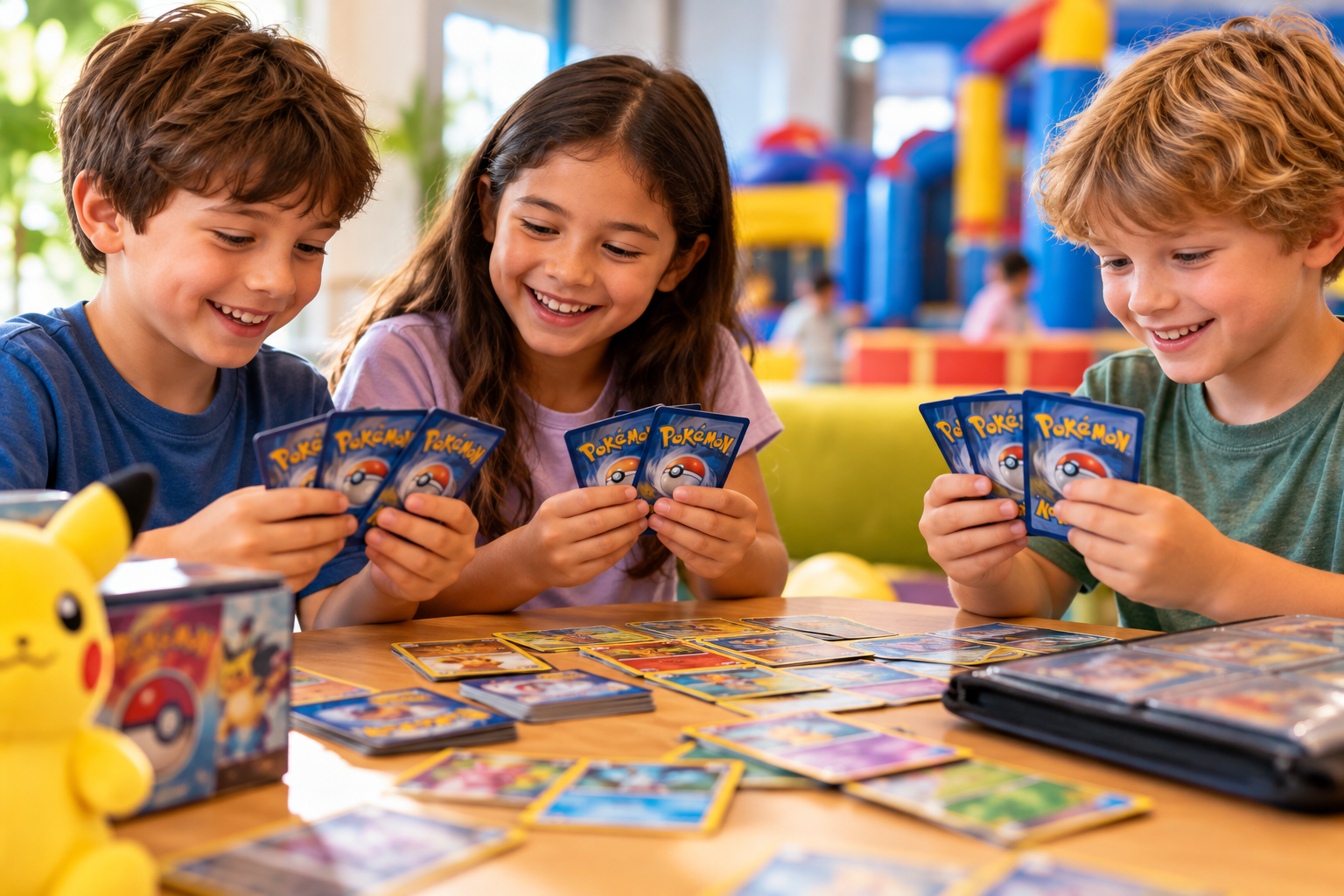
Pokémon cards have become a popular part of childhood, turning ordinary school conversations into discussions about favorite characters, rare discoveries, trading opportunities, and growing collections. For many children, opening a new pack brings excitement, while playing the Pokémon Trading Card Game offers an opportunity to challenge friends and develop strategies.
However, the increasing popularity of collectible cards has also raised concerns among parents. What begins as an affordable hobby can gradually involve repeated purchase requests, competition over expensive cards, disagreements between friends, and disappointment when children fail to obtain what they want.
Are Pokémon cards actually good for children, or can they create unhealthy habits? The answer depends on how children collect, trade, and play, as well as the boundaries parents establish. Understanding the benefits and risks can help families throughout Austin and Cedar Park make informed decisions without unnecessarily discouraging a hobby their children enjoy.
The Good: Educational and Social Benefits of Pokémon Cards
Encouraging Reading, Mathematics, and Strategic Thinking
Pokémon cards can introduce children to learning opportunities through structured gameplay. The Pokémon Trading Card Game requires players to read instructions, compare numerical values, understand card abilities, and make decisions based on available resources. These activities can provide opportunities to practice reading comprehension, mathematical reasoning, and strategic thinking.
Unlike simply collecting cards, playing the game involves evaluating choices and adjusting strategies as circumstances change. Children may also develop patience as they learn rules, build decks, and become more familiar with gameplay. The educational benefits are opportunities rather than guaranteed outcomes, and parental involvement can make the experience more meaningful.
Supporting Friendships and Social Interaction
Pokémon cards create common interests that can help children connect with classmates and friends. Discussing favorite Pokémon, comparing collections, and participating in friendly matches can encourage conversation and cooperation, particularly among children who enjoy sharing detailed knowledge about their interests.
Trading can also introduce negotiation and decision-making skills when exchanges are voluntary and fair. However, parents should emphasize that friendships should not depend on the number, rarity, or financial value of cards someone owns.
Teaching Organization and Financial Responsibility
Maintaining a collection involves sorting cards, protecting them from damage, and understanding the importance of caring for personal belongings. Children who organize their collections using binders or protective sleeves may develop useful habits around responsibility and organization.
Collecting also creates opportunities for parents to introduce budgeting. Giving children a fixed amount to spend encourages them to prioritize purchases, compare alternatives, and decide whether to buy immediately or save for something they value more.
The Bad: When Pokémon Cards Create Unnecessary Pressure
The Constant Desire to Purchase More Cards
One of the biggest concerns surrounding Pokémon cards is the unpredictable nature of booster packs. Children cannot control which cards they receive, and the possibility of discovering a rare or highly desirable card can make purchasing another pack particularly appealing.
The excitement of opening a pack may gradually become more important than enjoying the collection itself. Some children may repeatedly request additional purchases, especially when friends discover rare cards or new products become available.
Parents can reduce this pressure by establishing a predictable purchasing budget and explaining that buying more packs does not guarantee a desired result. When a child wants one particular card, purchasing that individual card from a reputable seller may be more economical than repeatedly buying randomized packs.
Peer Pressure and Competition Over Rare Cards
Pokémon cards can become symbols of popularity when children compare the rarity or monetary value of their collections. A child who owns a highly desirable card may receive attention from classmates, while another may feel disappointed because their collection appears less impressive.
This environment can unintentionally encourage children to associate expensive possessions with social acceptance. Parents should help children recognize that the value of a hobby comes from personal enjoyment rather than competing with friends.
Encouraging children to appreciate favorite characters, artwork, and gameplay can help shift attention away from monetary value.
Trading Disagreements and Unfair Exchanges
Trading is an important part of Pokémon collecting, but children may not fully understand differences in rarity, authenticity, condition, and resale value. A trade that initially appears fair may later create disappointment when one child discovers that the exchanged card was significantly more valuable.
These situations can lead to arguments between friends or disagreements among parents. Families should establish clear trading rules, particularly for younger children, and require approval before valuable or sentimental cards are exchanged.
School policies should also be respected, as some classrooms restrict card trading to prevent distractions and disputes.
The Worst: Financial Risks and Unhealthy Emotional Attachment
Treating Pokémon Cards as Financial Investments
Stories about rare Pokémon cards selling for substantial amounts can create unrealistic expectations among young collectors. Children may begin believing that purchasing booster packs offers an opportunity to discover valuable items and potentially make money.
However, collectible values fluctuate according to demand, authenticity, rarity, and condition. Most cards do not achieve extraordinary resale prices, and purchasing additional packs does not guarantee a financial return.
Parents should explain that Pokémon cards are primarily entertainment purchases rather than dependable investments. This distinction helps children understand that enjoying a collection and expecting financial profits are two very different things.
Counterfeit Cards and Online Scams
The popularity of Pokémon cards has created opportunities for counterfeit products, misleading advertisements, and questionable online sellers. Children may encounter imitation cards, unusually inexpensive products advertised as rare, or listings that exaggerate potential value.
Parents should supervise online purchases, use reputable retailers, and help children understand the importance of verifying authenticity before spending significant amounts. Comparing advertised prices with actual completed sales can also help families avoid unrealistic expectations.
When Collecting Begins Affecting Emotional Well-Being
Occasional disappointment is a normal part of collecting, particularly when children do not receive a desired card or regret a trade. However, parents should pay closer attention when collecting consistently causes excessive arguments, secrecy around purchases, significant distress, or a loss of interest in other activities.
Strong enthusiasm alone does not indicate addiction or a behavioral problem. The concern is whether the hobby begins interfering with relationships, responsibilities, household finances, or everyday well-being.
The goal should be to help children appreciate their collections without allowing ownership of rare cards to determine their happiness or self-confidence.
How Parents Can Establish Healthy Pokémon Card Habits
Parents do not necessarily need to discourage collecting. Instead, they can establish practical guidelines that allow children to enjoy the hobby while learning financial responsibility and appropriate social behavior.
A reasonable approach may involve setting a monthly spending limit, discussing purchases before visiting stores, supervising valuable trades, and encouraging children to play the actual card game rather than focusing exclusively on rare-card ownership.
Children should also understand the difference between wanting something and needing it. When parents respond consistently to purchasing requests, children can gradually learn that disappointment does not always require an immediate purchase and that hobbies can remain enjoyable without constant additions.
Families interested in learning the official game rules can explore the Pokémon Parents resource center, which introduces the trading card game and other ways to participate in Pokémon activities.
Supporting a child’s interests does not mean agreeing to every purchase or allowing a hobby to become a source of pressure. Parents can encourage enthusiasm while establishing realistic expectations, an approach that also applies when raising passionate kids and supporting their interests without unnecessary pressure.
Pokémon Cards and Active Play: Creating a Balanced Childhood
Collecting and playing Pokémon cards can offer intellectual and social engagement, but children also benefit from opportunities to move, explore, and enjoy activities beyond their collections. Physical recreation introduces different experiences involving cooperation, competition, and managing disappointment. Parents interested in understanding these benefits can explore how active play helps children learn to win, lose, and take turns.
For families throughout Austin, Cedar Park, and Leander, Inflatable Wonderland at Lakeline Mall provides an indoor environment where younger children can enjoy inflatables, slides, and playground activities. Families planning an outing can find the location and directions to Inflatable Wonderland in Cedar Park before their visit.
Parents do not have to choose between card collecting and active play. Both can be part of a well-rounded routine when children have appropriate boundaries and opportunities to enjoy different activities.
Key Takeaways
- Pokémon cards can support learning: Structured gameplay offers opportunities to practice reading, mathematics, decision-making, and strategic thinking.
- Collecting can encourage responsibility: Organizing cards, managing a budget, and caring for belongings can introduce practical life skills.
- Spending and peer pressure require attention: Rare-card expectations and randomized booster packs may encourage repeated purchases and social comparison.
- Trading needs clear boundaries: Younger children may not understand card values, making parental supervision important for expensive or sentimental exchanges.
- A balanced approach works best: Pokémon cards can remain a positive hobby when children also enjoy other interests, physical activities, and family experiences.
Frequently Asked Questions
Are Pokémon cards good for children’s development?
Pokémon cards can provide educational and social opportunities, particularly when children participate in structured gameplay. Reading instructions, comparing numbers, planning strategies, and interacting with other players can encourage useful skills. However, collecting alone does not guarantee developmental benefits, and the hobby should complement other learning and recreational experiences.
Why are kids so interested in Pokémon cards?
Pokémon cards combine recognizable characters, colorful artwork, collectible designs, social interaction, and the excitement of discovering unexpected items. Children may also enjoy the sense of accomplishment associated with building a collection. Peer interest and the popularity of rare cards can make the hobby particularly appealing.
Should parents allow children to buy Pokémon booster packs?
Booster packs can be enjoyable when purchases are occasional, affordable, and consistent with household spending expectations. Because pack contents are randomized, children should understand that buying additional packs does not guarantee obtaining a particular card. Establishing a budget can help prevent repeated purchases driven by disappointment.
Are expensive Pokémon cards worth buying for children?
The answer depends on the family’s budget, the child’s maturity, and the purpose of the purchase. Expensive cards may have collectible value, but prices can fluctuate and authenticity must be verified. Parents should avoid presenting collectible cards as guaranteed investments and consider whether the purchase provides meaningful enjoyment.
Should children be allowed to trade Pokémon cards at school?
Trading can provide opportunities to practice negotiation and fairness, but children may not fully understand differences in card value. Parents should establish clear rules, supervise valuable exchanges, and follow school policies. Expensive or sentimental cards should generally require parental approval before trading.
Can collecting Pokémon cards become unhealthy?
Collecting may become problematic when it consistently interferes with responsibilities, relationships, emotional well-being, or family spending limits. Enthusiasm alone is not a warning sign. Parents should focus on patterns of behavior and help children maintain a reasonable balance between collecting and other interests.
Conclusion: Helping Children Enjoy Pokémon Cards Responsibly
Pokémon cards are neither inherently good nor bad for children. Their impact depends on how the hobby is approached, the expectations surrounding purchases and trading, and the boundaries established by parents.
When children learn to appreciate their collections without becoming overly focused on expensive cards, Pokémon can offer opportunities for learning, friendship, and personal responsibility. However, parents should remain attentive to spending pressure, unfair exchanges, and unrealistic expectations about collectible values.
For Austin-area families, maintaining a balance between collecting, recreational activities, and shared experiences can help children develop varied interests. Inflatable Wonderland at Lakeline Mall in Cedar Park offers one way for families to incorporate active indoor play into that balance.
Ultimately, the most valuable lesson is not how many Pokémon cards children collect, but whether they learn to enjoy their interests responsibly, respect financial boundaries, and appreciate experiences beyond material possessions.